An Ode to Flying

11.10.26

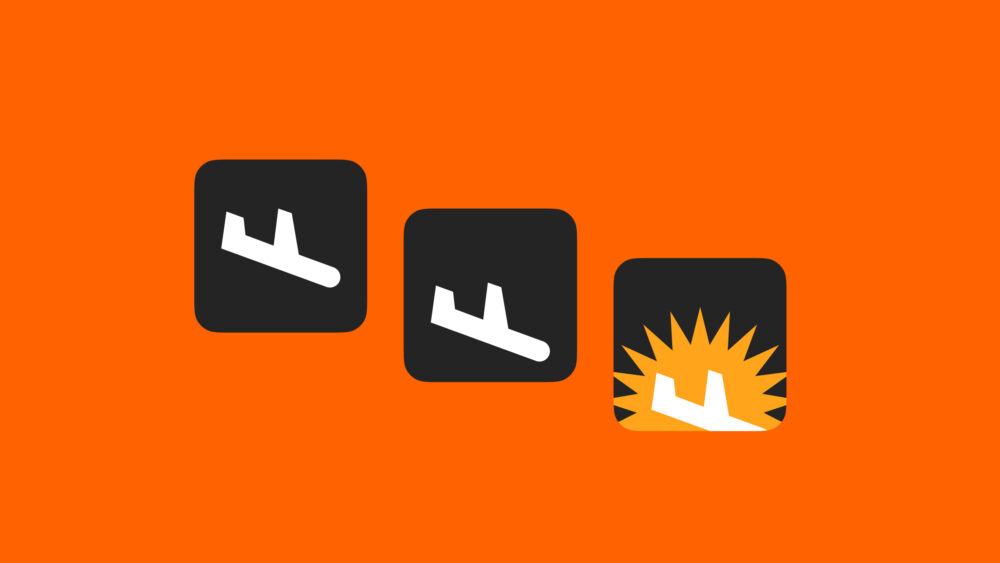
The other day I was on my way to the airport when I noticed that the icon for “arrivals” is quite incorrect, depicting an aeroplane headed nose-first towards the tarmac. That’s not a landing, I thought; that’s an imminent aviation disaster. But then again, I’d rather die in a huge fireball than arrive at the airport in one piece. I hate airports.

Firstly, there’s getting there. An airport can never be found in a convenient location; it’ll either be 100 km away or hemmed into an awkward spot between a mess of gridlocked roads. A taxi there will always be a pretty penny, but the public transport links (if there are any) will also be ridiculously expensive for the mediocre service they offer. However you decide to go, you’ll never get there on time. You’ll either turn into your dad and arrive six hours early, or some holdup on the way will leave you in a panicked scramble for your flight.

Upon stepping on airport grounds, people collectively and suddenly forget how to act as functional human beings. As they cross the threshold of the building, they stop dead in their tracks, clueless as to what to do next. Despite most of them having traversed an airport at least once before, you must now spend the next two hours shoving your way through crowds of bodies that have frozen in panic during the various stages of terror which you too are about to experience.

It begins at the turnstiles where you have to scan your boarding pass. People will be absolutely hogging the things, attempting to scan their library card, bus pass, Tesco receipt, or any other document that isn’t their boarding pass in an attempt to get through. I think this is because nobody actually wants the turnstiles to open, as what looms beyond is the endless zigzagging of the queue for security.

This is where things really fall apart. 

The protocol is simple. Large electronics and liquids out of your bag, boots and belts off, everything in the tray. It’s well signposted, and the rules are familiar to anyone who’s flown before. And yet here we have a woman asking an incredulous security operator whether water counts as a liquid, and there’s an elderly man in the next lane along being scolded for trying to barge through the metal detector with his whole backpack. There’s a look of abject terror in his wife’s eyes; I guess she thinks he’s going to be arrested. If I were prime minister, he would be.

Once you’ve worked your way through the hopeless masses, you will enter the repacking area, a feature that nobody thinks to use. You will always be lumped in with that one twat who insists that he must get everything back into his bag before it hits the end of the rollers behind the X-ray machine. Get your stuff and move out the fucking way so I can get mine.

Now that the humiliation of security is over, it’s time to be humiliated all over again, this time at passport control. Another maze of queues awaits, after which I’ll be asked to show my boarding card out at the exact moment that my phone screen seizes up and stops working. I’ll eventually get it working, though, and they’ll let me pass through to confront the final boss of airport horrors: duty free.

Does anybody actually like duty free? Or is our collective loathing for it the reason behind them forcing us through the place? With a bulky bag on my back, I have to slalom my way between shelves full of glass bottles and ceramic gifts, a recipe for disaster that, miraculously, has never come to pass. Then there are the salespeople at every turn, caked in foundation and way too much hair gel. They lie in wait, prepared to attack and offer you a sample of the latest overpriced perfume. Fellow passengers also block the way, stopping suddenly to take a look at a huge Toblerone or pack of ten thousand fags. This gymkhana through one of the most overstimulating places on earth continues until you emerge at the other end, now more flustered than ever.

This is not ideal, as you’re about to enter the Wild West that is the departure lounge.

The departure lounge is the closest thing to purgatory we have here on earth; a place where there’s nothing to do but wait. You can’t simply walk onto your plane and get cozy, but neither can you relax. This is partly because you’re still completely overwhelmed by the meat grinder through which you have just passed, but also because you’ve to be on high alert. You never know when your flight might be altered, your gate changed, or other such last-minute nonsense. And you can’t check it from where you want to sit, because the information screens are always facing the other damn way.

Not that there is anywhere to sit down anyway. If you were ever curious as to what the unwritten rules of urinal etiquette are, just observe how people distribute themselves across airport seating: exactly one free chair between each occupied one. These empty seats will then usually be occupied by someone’s backpack or jacket as a deterrent should you even think of sitting there. You could technically sit here, they signal, but you’d have to ask my owner, and you’re probably too exhausted to actually do that at this point.

So you may resolve to do something useful with your time. If you craftily emptied your water bottle before a sour-faced security guard could pinch it off you, now is the time to go and refill it. If you’re lucky, the airport will offer working water fountains, but they’ll be surrounded by squelching and mouldy rugs. These will all be located just next to the toilets in such a way that you can catch a whiff of clandestine cigarettes and fresh faeces emanating from the cabins within. At least this will help numb your appetite and save you being bled dry by the airport restaurants.

With still no seat in sight, you’ll then begin to wander around in a daze, hoping to come across some hidden corner of the airport where nobody will charge you money just for existing. But all you’ll find is empty corners, abandoned signage, and liminal spaces full of dust. You’ll discover the presence of this dust as you throw your exhausted body onto the grimy floor, now resigned that this is where you’ll be spending the next hour or so.

When the time eventually comes, you’ll have to walk to your gate, which will undoubtedly be found at the opposite end of the terminal. The airline worker will probably insist on checking your bags and then try to fine you for oversized baggage. Either that, or they’ll not bother checking at all, which will piss you off all the same as you’ll be angry that you didn’t dare to pack that extra pair of shoes. Everything in this cursed place presents a lose-lose situation.

The airbridge will then be either too hot or too cold, which wouldn’t be a problem if they didn’t always keep you waiting there for an inordinate amount of time. It’s okay, though, as you can entertain yourself with the endless adverts or by dodging the airport workers trundling up and down with bulky cases. You may decide to sit on the floor once more, but you’ll undoubtedly end up doing that at the exact moment the queue begins to move again.

With that, though, your time at this insufferable place will be coming to an end. You’ll walk past all the smarmy buggers with the extra legroom, or brush shoulders with the haughty-naughty crowd filing into business class. You’ll find your seat, smile awkwardly at the person next to you, and prepare for a different kind of suffering: the flight itself.

But at least you’re not in the fucking airport.

When there’s a new phone out, we all fawn over its design. We lust over its new materials and rush to get our mitts on the latest colour. Once we’ve the shiny new device in our hands, we admire its beauty for thirty seconds, maybe even a minute. Then, we unceremoniously shove the thing into a tacky plastic shell. It will now seldom be liberated from the evil that is the phone case.

In general, I do love a good contradiction, but this particular one annoys me. Maybe it’s because it involves mindless consumerism, maybe it’s because I’m a designer, or maybe it’s because it’s way too warm for October and I’m in a bad mood. But buying a phone because you like its design and then casing that design in some cheap plastic monstrosity makes little sense, even if it is “premium” (still ugly) or “invisible” (destined to yellow with age).

As much as I believe in the infinite stupidity of people and would love to blame them for this paradoxical behaviour, I’m going to complain instead about the two corporations involved.

First up, there are those who sell these cases. In Spain, we have La Casa de las Carcasas, a retail chain whose shops are dedicated exclusively to the sale of phone cases. These places are about as vibrant and garish as the product they sell, but in a way they remind me of little black cockroaches. Not only are they to be found on every street of the city, I can also imagine them surviving the apocalypse. Once the dust has settled after Putin nukes us all, there’ll still be a teenager in a green t-shirt ready to show you the latest range of floral phone cases.

Then there’s the tech companies pumping out a new model of phone every year. Faster, lighter, better battery life. A new design which is more durable and shatter-resistant than ever. The way they harp on about the invincibility of these phones, you’d think that cases would have been rendered useless by this point. But none of us really believe these claims, do we? I would ask why the hell we are buying devices from companies we don’t trust, but that’s a whole other topic and the unseasonal heat is limiting my brain to one simple thought at a time.

I also have to admit my biases, though. Those who know me will also know how insistent I am on the maleficence of phones. I think they’re evil. And because I think they’re evil, I don’t think they warrant being protected.

So come on, let’s live a little. Throw your nasty phone case in the bin. It’s ugly and I hate it.


The Spanish eat so late!
They speak so loud!
Everyone is so direct!

Before moving to Spain, I’d heard the rumours, and just a few days into my living here, I could confirm that at least these three were true. But it’s been a while now, and I think I’ve just about gotten used to all that. Me he españolizado. But there’s still one thing that has me at a loss, both figuratively and literally: the lack of decent signage.

Whether it’s a hospital or a department store, my local supermarket or a train station, there’s always a noticeable lack of decent wayfinding here. We Madrilians might complain about the terrible signage on the city’s ring road, but the problem is much more widespread than just some dodgy signs on slip roads. No matter your location, it’s an odyssey to figure out how to get to where you want to go or, even worse, where you already are.

I’m not exaggerating. Take any complex building or structure, and you’ll be faced with one of two scenarios. There might be a complete lack of signs, in which case you can either ask for directions or simply head off on an adventure to try and find what you’re looking for. Alternatively, you’ll find a disjointed system of haphazard and often homemade signs, often improvised by exasperated employees who are fed up of attending to people who are unable to orient themselves. This visual cacophony is often more confusing than having no signs at all.

This flies in the face of a basic design principle. When we encounter a wall which has been plastered with a thousand signs, we will simply not read a single one — even though one of them is probably pointing us in the right direction. It’s a scenario that reminds me of a talk by the late Ken Garland in Leeds over a decade ago, in which he praised the lack of signs in the auditorium in which we all sat. It was the first time that anyone had plainly laid out to me one of the most seemingly obvious laws of visual design: the more content you include, the less people will read.

But these design laws aren’t respected here. Despite this country’s many admirable qualities, I keep coming back to this one failing: the signage is terrible and I keep getting bloody lost.

This usually results in one thing: I have to open my mouth and ask someone. I don’t care if they’re an employee, a random bystander, or someone who looks equally as lost as me, I’ll approach them and ask for directions. This is partly out of sheer necessity, but it’s also a habit learned through observation. Faced with awful wayfinding, people here just speak up and ask.

And that right there is the crux of this conundrum. Perhaps Spanish people don’t worry about signage because they don’t rely on it. They don’t care if there’s no way of figuring out where the gastroenterology department is, because they’ll just wander up to the first person they see and ask. If that person doesn’t know, on to the next.

I have to admit that I took this theory from a colleague after a conversation about it last week, which undoubtedly arose after I began complaining about Spanish signage. Hers it may be, but I feel that, as an outsider, I can testify to its veracity. I come from a culture which tends to avoid interaction more than promote it, and this conclusion seems to make perfect sense.

So never mind late meals, shouting, or directness, what might set Spain apart from my native England more than anything is the value placed on community over the individual. I think it’s this fundamental cultural difference that encourages these little social interactions, from the idle chit-chat in waiting rooms to the collective strife to try and find the bloody pillow cases in El Corte Inglés. The signage is lacklustre because nobody really cares to read it anyway. It’s secondary, a fallback.

Being a designer and an introvert, I’ve to admit that I prefer the English system. There’s nothing more pleasing to a typography nerd than a well composed wayfinding system, and there’s nothing greater for a weak social battery than being able to navigate a space without having to look a single person in the eye. But, deep down, I know that the Spanish system is probably better.

As much as I may love the signs in John Lewis, I think that a society which speaks to each other is a society a little less doomed to loneliness and unhappiness. For the greater good, I’ll have to put up with shitty bits of paper sellotaped to a wall at my doctors.

This whole theory is just that, so I could be way off. The link between societal priorities and the quality of wayfinding signage must just be one huge coincidence. Just like me being on the right floor at the hospital.


There’s always that one person in the family who simply has to tell everyone about their latest gadget, demonstration and all. In my case it was my great uncle, who one day showed up with a new phone and proceeded to demonstrate how it flipped open to reveal a circular number pad, much like an old rotary phone. He was a great guy, but my raging teenage angst meant that my reaction wasn’t exactly one of awe. I have a phone too, I thought, and I don’t have to flip it open to use it.

Bear with me, though, as that’s not where I’m going here. I really do get the attraction of being able to carry a large screen around. But today I want to talk less about the design of these devices and more about what they represent.

Mobile phones have been a status symbol for as long as I can remember. From Blackberry Messenger to the latest iPhone model, people don’t want to feel left out.The Duo marks the biggest break from the design of the iPhone since the original set the industry standard of one big screen. This means that it’s easier than ever to distinguish: onlookers don’t have to know about the latest colour option or camera layout to see that you’ve got the latest device. This will have tech nerds, rich kids, and your friend who thinks they’re an influencer clambering like never before to get their hands on the thing. Not just to boast their wealth, which the price tag definitely facilitates, but as a tool to demonstrate that they are keeping up with what’s new and trending.

My frustration here comes from the fact that Apple, in looking to pander to such an audience, have become them. They are now that annoying uncle who has to prove that he’s also up-to-date. Look, they’re saying, we can also do foldables!

It’s ironic that this company, whose vocabulary is increasingly limited to buzzwords such as innovation and revolutionary, have shown up so quantifiably late to this particular party. These modern foldable phones have been around for a while, and there’s nothing about Apple’s offering which is particularly groundbreaking. The rather decaffeinated descriptor from their website calling it “the first foldable iPhone” seems to offer a glimpse of self awareness; a tacit admission that the most unique thing about the Duo is that, if it wasn’t for the Apple logo on the back, it’s just another foldable phone.

There’s nothing wrong with making “just another foldable phone”, of course. I’m sure it’ll be a good one. I’ll definitely be admiring its design, sleek animations, and quality materials. I’m not that bitter. But I am nostalgic —perhaps too much so— for the time when Apple used their delayed entry into a sector to meaningfully innovate on what had come before. I was hoping that their first foray into foldables would come with some memorable world-first. It hasn’t. And I think that if you’re going to show up this late to a party, you’d better have something to show for it. You know, some extra booze or whatever.

So then, in the great words of humorist Will Rogers, “never miss a good chance to shut up.” It’s one of my favourite quotes of all time, and one which I find applicable to most situations in our hyperconnected world. It ties in perfectly with my worldview that there is great joy to be found in deciding not to do something. I do wish Apple would have applied this here. At the risk of going on a nostalgia trip once again, a guy called Steve Jobs once asserted that “deciding what not to do is as important as deciding what to do.” It’s a nod to a laser-sharp focus that has slowly been lost.

That said, I know why they’ve done it. I know that shareholders demand constant new releases and increasingly rapid growth. I know that Apple needs to offer something new to iPhone customers before they defect to enemy camps, seduced by competitors’ novel foldable phones. But I also know that the company has the bright minds, technology, and financial oomph to create something that is really and truly new. The iPhone Duo isn’t it, though.

This is, at the end of the day, a trivial issue: simply another purchase that people will make with absolutely zero impact on me or my life. But I am here to have a good old whinge and a moan, and this is the issue that everyone’s talking about right now. That’s because, deep down, we’re all that annoying uncle in one way or another. We either subscribe to the fad, or we talk about how superior we are for not succumbing to it. Lately, I’ve been the latter. I’m becoming insufferable.

My response, then, will be to do the same thing I have after all of Apple’s latest releases: I’ll stick another piece of tape to the smashed glass of my iPhone 12 and continue to flick away the pestering software update notification.  I’ll nurse this phone through its ailments, current and future, right to the bitter end.

In doing so, my battered and ancient phone will become just as much a virtue signal as a brand new iPhone Duo. It’ll indicate my feelings of superiority at not giving into what I perceive as societal pressure rather than true technological innovation.

Does that make me as much as a cunt as the next guy? Probably.