Another day, another 2-week-late blog post – but I’m here, I’m full of chorizo quesadillas, and I’m ready to bring you as up to date as I can. As you are well aware by now, I am chilling out (and also working, but it doesn’t really feel like work) here in the glorious city of Madrid. Alone until my dad’s visit a few weeks ago, I was also recently joined by my friend Georgia, who I got to know as one of the other UGRL Scholars – have a nosey at the latest UGRLS antics here…
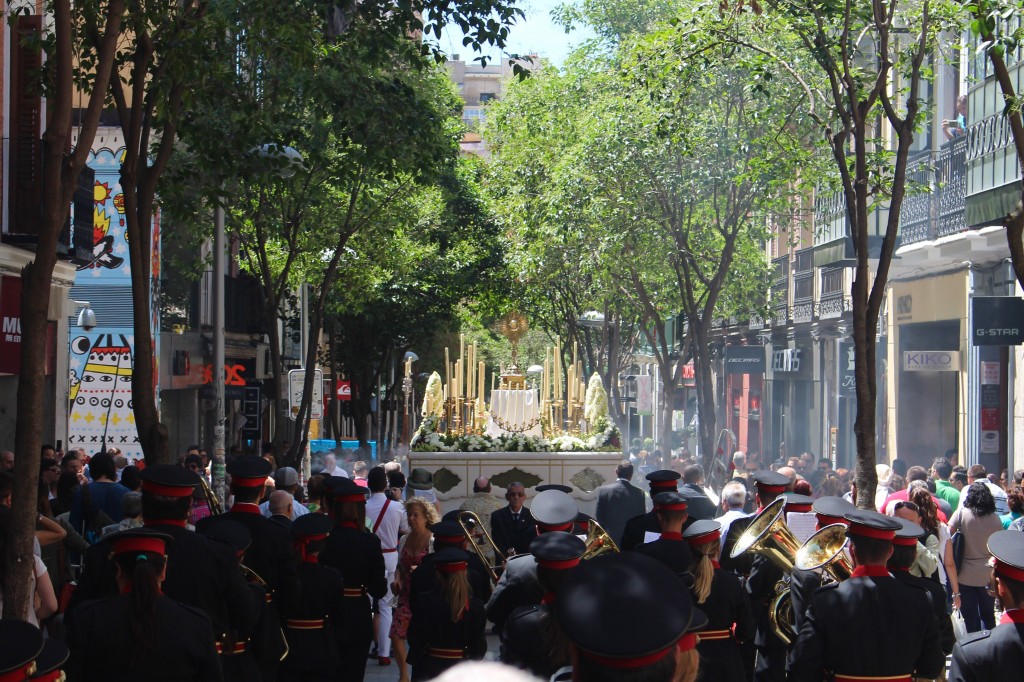
We started off by blazing through all the must-see sights of Madrid, before slowing the pace down a little, which was when we accidentally stumbled across a beautiful traditional parade, which I was told by some Spanish ladies I got talking to had come all the way to Madrid from Seville in the south of the country.
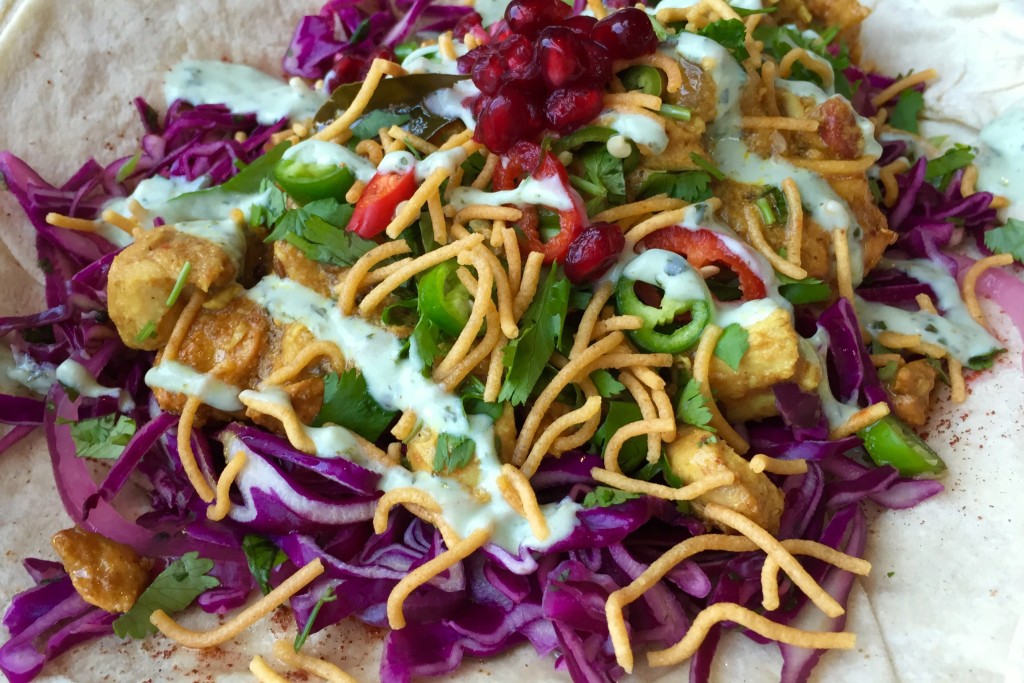
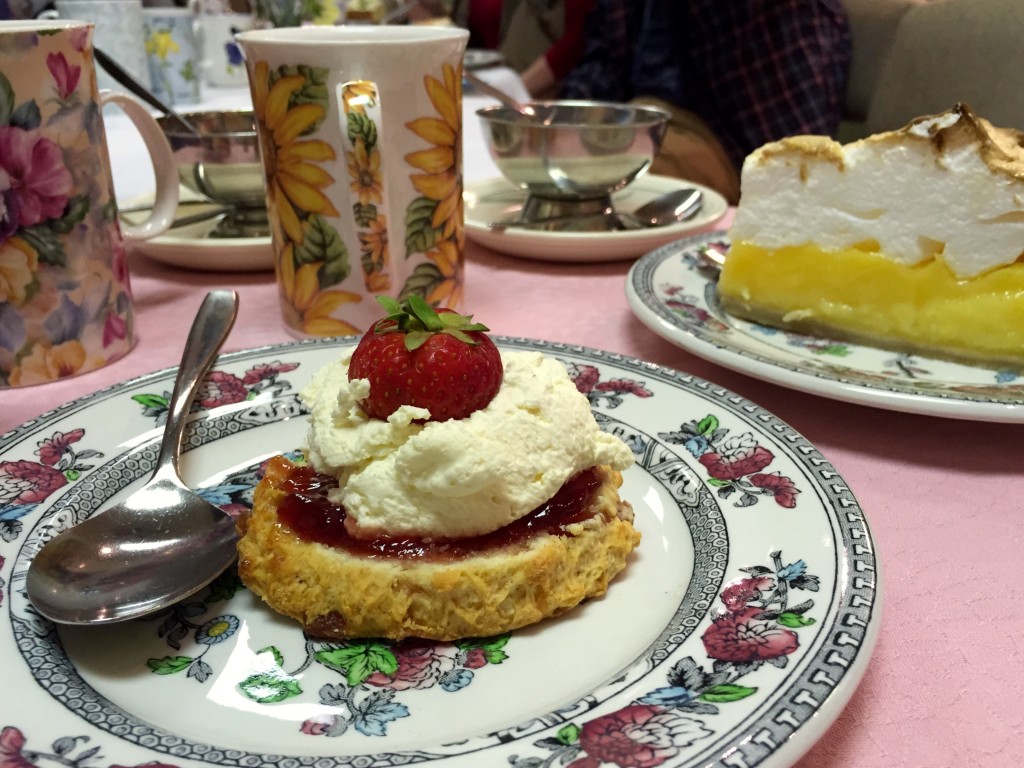
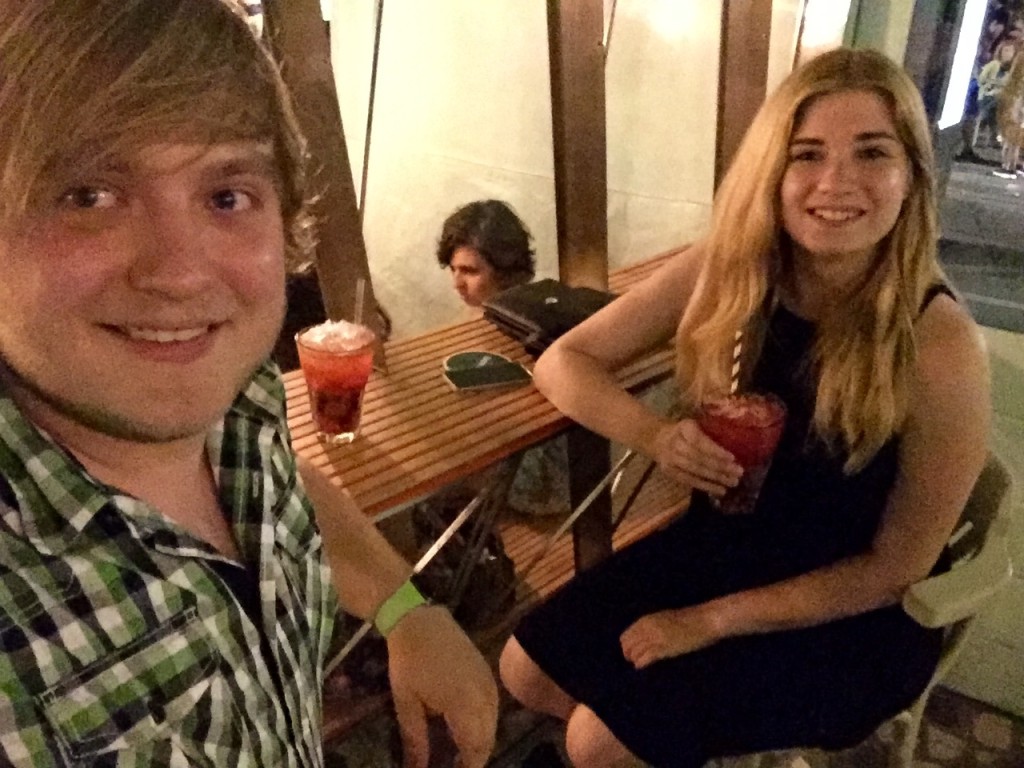
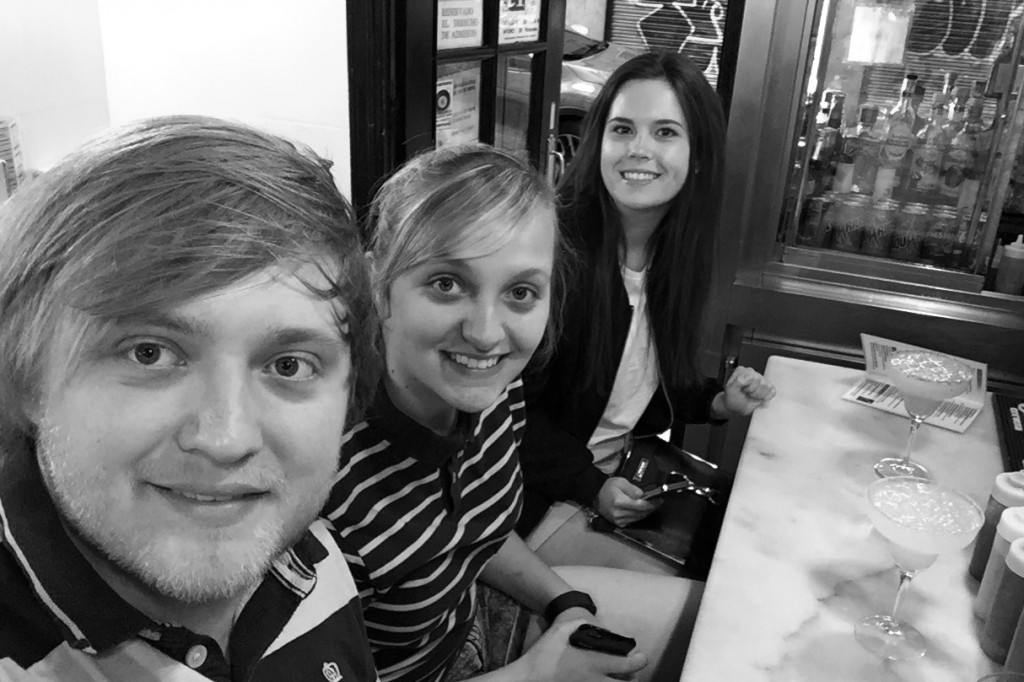
Whilst George was here in the city it was also my birthday, but I am well renowned for not celebrating it (or delaying it by months), and so we took it easy and had some Mexican food and margaritas. The best part of the day was when George handed me the present she’d brought over – a box of Tetley Tea – decaffeinated and all!
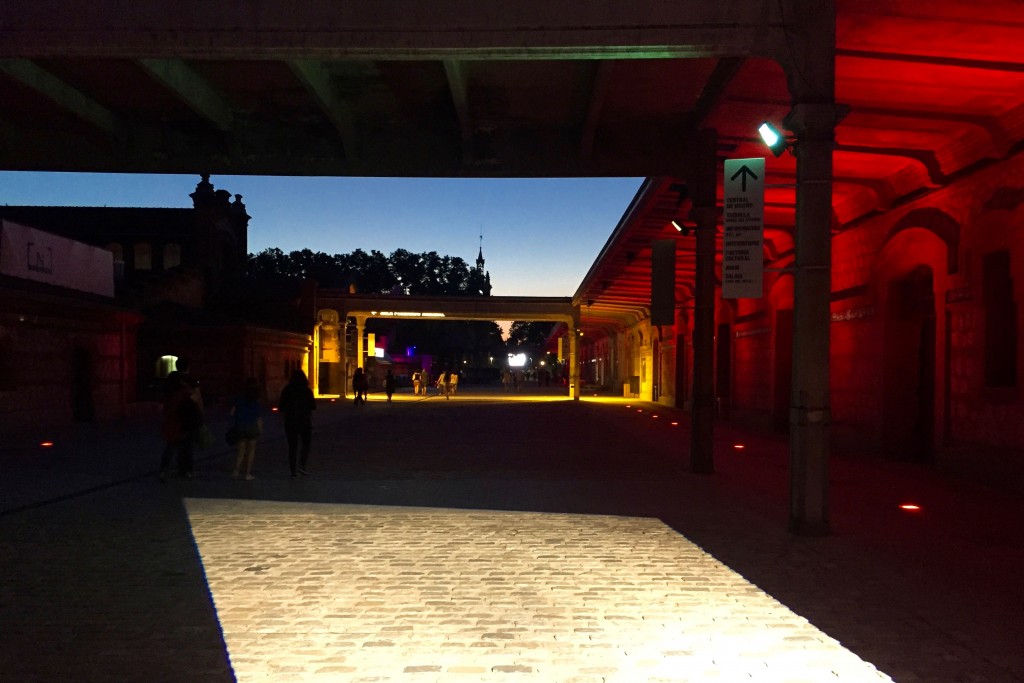
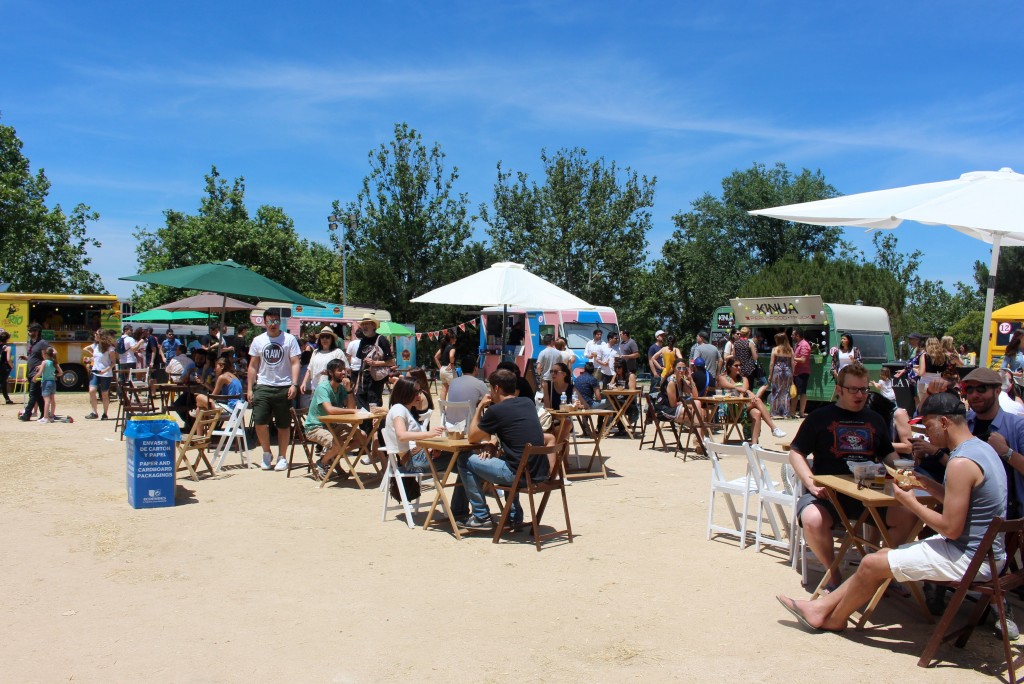
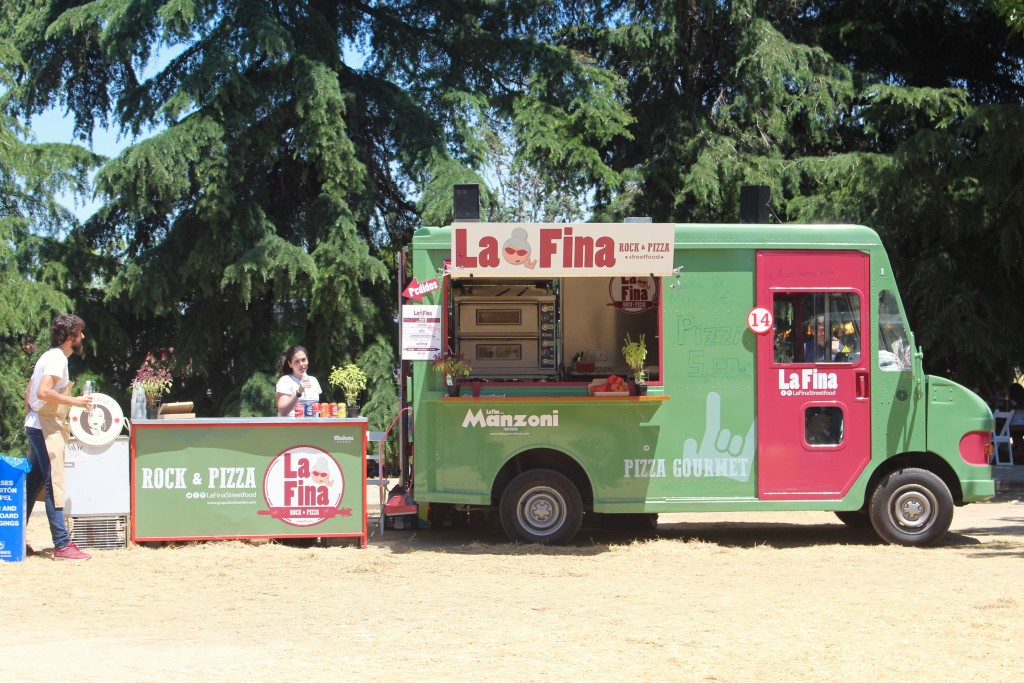
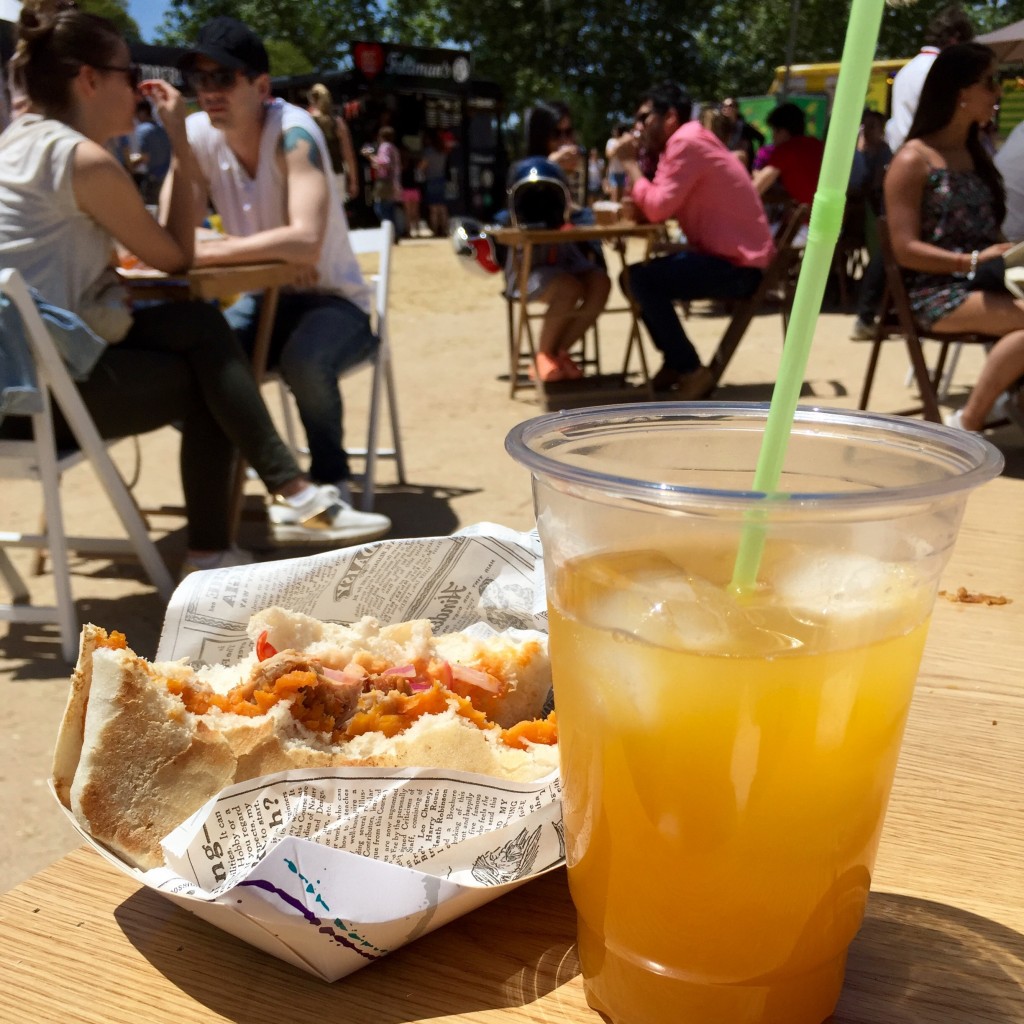
We also happened to chance upon a food market down at the Matadero, where I wasted no time in making a beeline for a paella stand. George grabbed a burger, we both grabbed a glass of tinto de verano (a little bit like sangría), and laid by the river for a while.
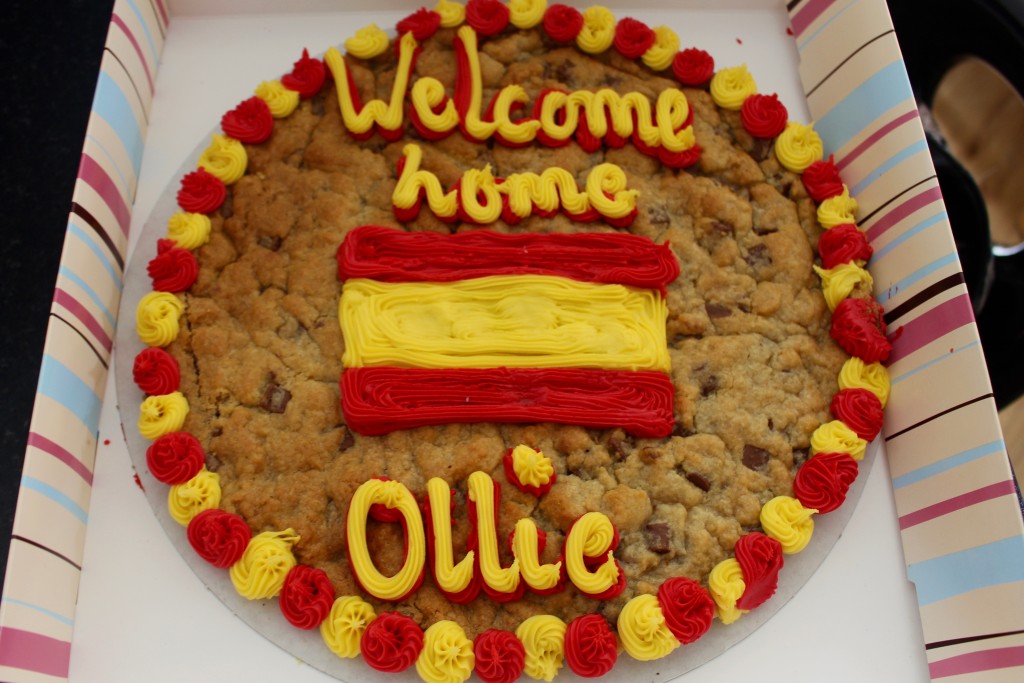
All too soon, though, it was time for Georgia to head back to the airport and to her work placement back in England, and I was off back to designing and dishing out hobnobs in the Erretres studio. It was another lovely few days though, and we even managed to catch a military parade for the “Day of Madrid” celebrations on the evening before she left!
As I write this my mum, auntie, and uncle have just about landed back down in my auntie’s flat in Murcia, after also visiting the city for an extended weekend – but I have yet to process all the photos from that, so I should hopefully be back with another update in the next couple of days!
Until then, I leave you with una de las canciones más madrileñas (one of the most typically Madrid songs) I can think of – “Una Estrella En Mi Jardín”. Click here, wait at least until the drama begins at 1:39, and enjoy. Turn on the subtitles if you fancy a sing-along.
Somehow I have miraculously managed to wind up with another bout of fever in the past week, and so my blog has once again been left feeling a little stale for a few more days than I’d have hoped – but fear not for I am here, and for a few fleeting days, so was my dad, and for his first time in Madrid I had been sure to line up a non-stop schedule of round-the-clock activities for the four days he was here.
Having spent the day before my dad arrived rather sick, I approached the airport with caution, taking the most direct journey and ebbing along the path to the terminal on foot, and as slowly as possible. Eventually, though, I gave up and caught a free bus to the terminal, where I waited at arrivals and was soon reunited with someone from England for the first time in nearly 3 months!
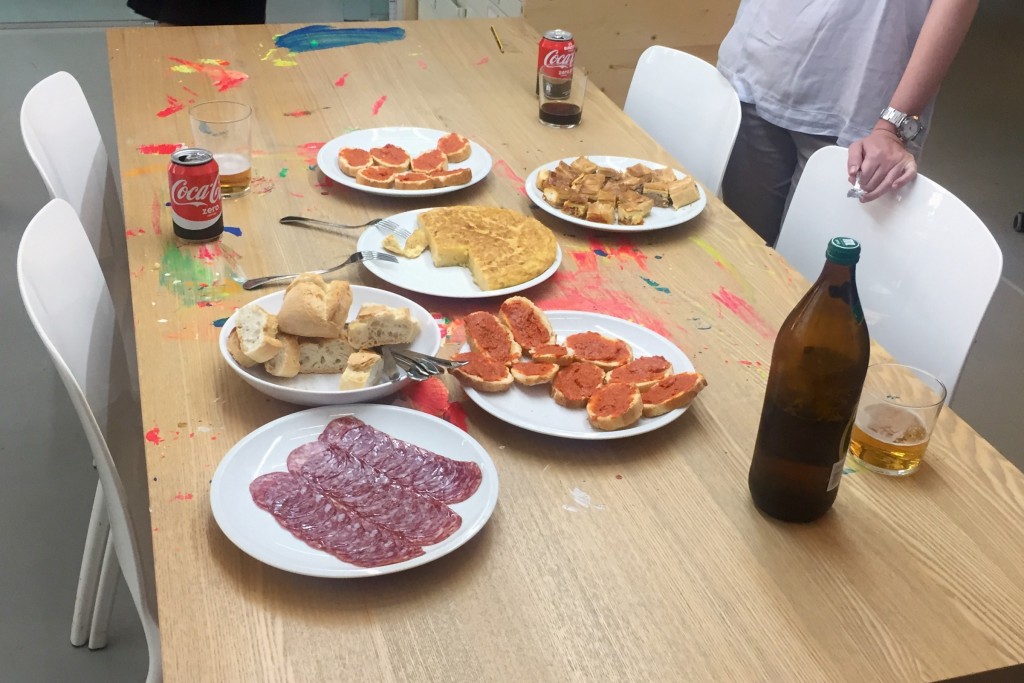
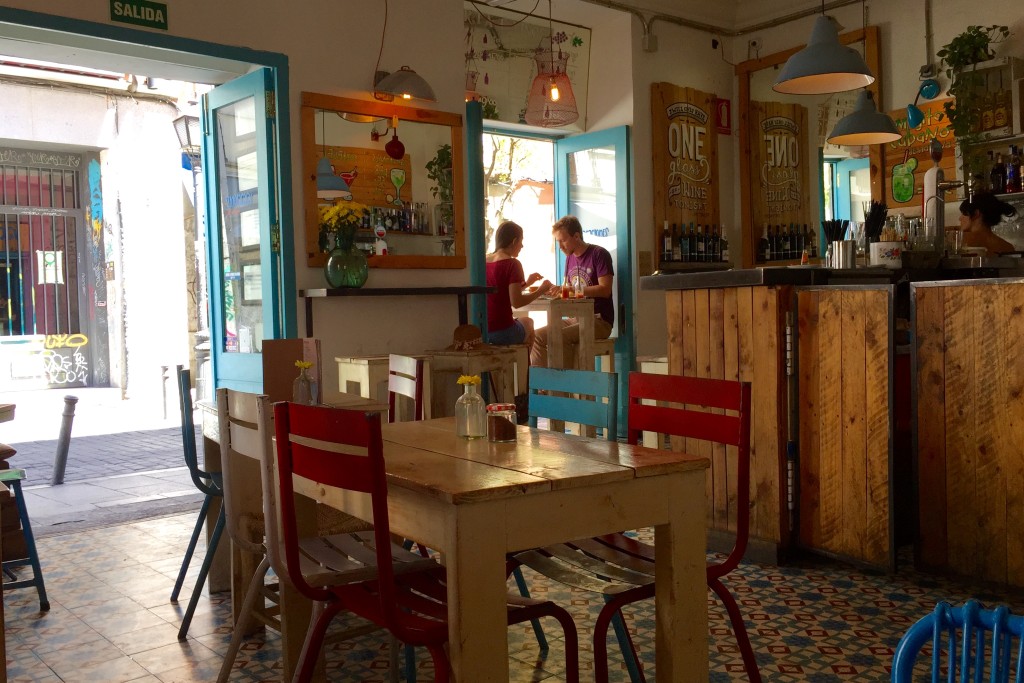
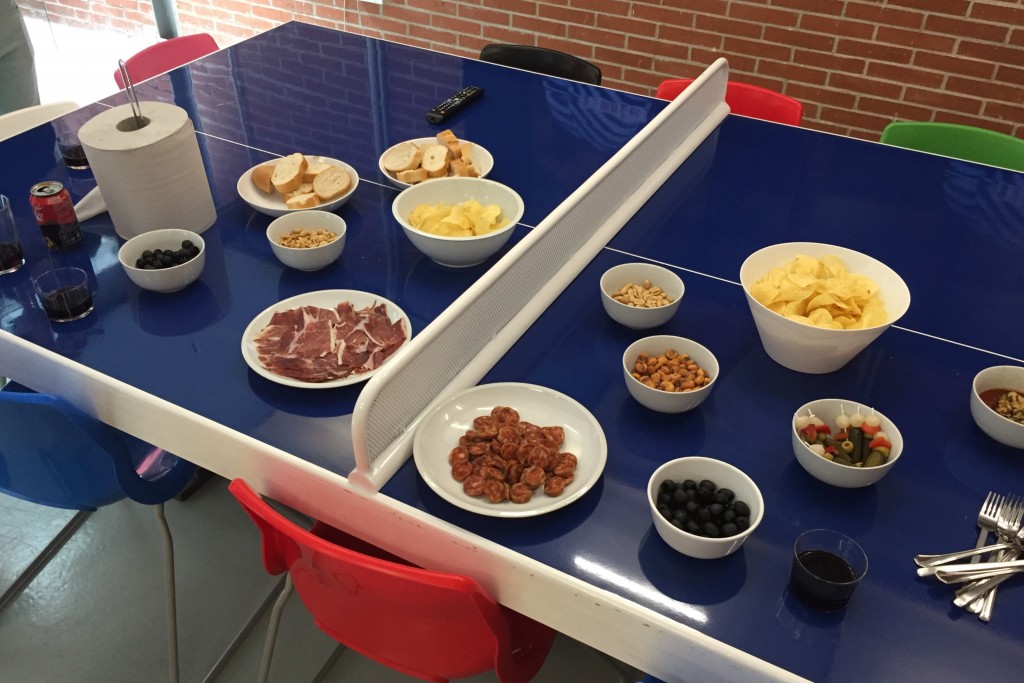
Once we’d gotten into the city, we headed to buy some aperitivos (small portions of food to share around) and then straight to the Erretres Studio to meet the amazing bunch of people I work with and enjoy some jamón with the team. Once full of bread and cheese we marched down to the local café where we have lunch, and we enjoyed a very traditional three-course Spanish lunch.
Once done we were once again on the move, headed up Gran Vía and towards Sol, where my dad was staying. Once he’d checked into his hostel and we’d had another wander around the centre, we rocked up at Plaza Mayor, where we found a bunch of retirees had assembled to do some waltzing in the square…
After a little more wandering we rocked up at the Royal Palace, where my dad finally got the chance to take a glimpse at the royal quarter of the city.
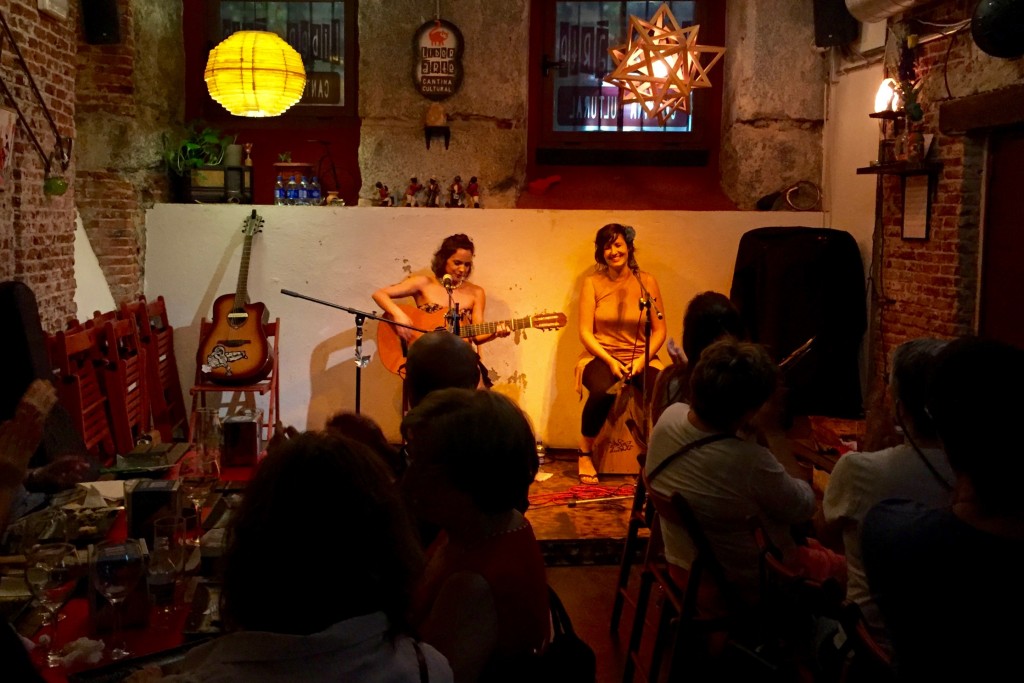
That evening we headed back toward Plaza Mayor for some tapas at a local bar that I frequently haunt, and then on to a little bar in the nearby La Latina district for some drinks and live music. I had to head home relatively early for work the next day, but I had prepared a pair of tours for my dad to head out on whilst I was working, after which I met him at Parque del Retiro and we continued our exploration…
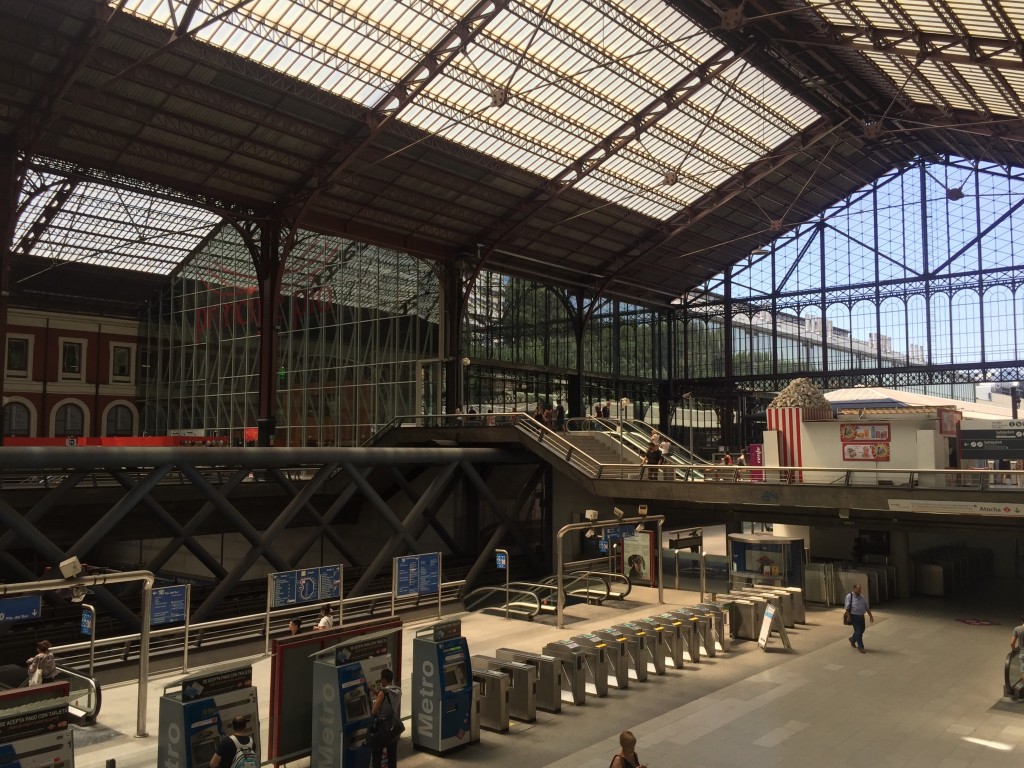
After exploring the beauty of the park and the architecture of the nearby Crystal Palace and Atocha Train Station, we headed back into the city to explore the shopping district, eat some nachos, then head on to my favourite taquería for a bunch of tacos and Mexican beer.
The next day the weather here really didn’t cooperate with our plans, and so we hopped on the Metro to see the Puerta de Europa, the famous pair of buildings which lean toward each other over the Paseo de la Castillana. Whilst there, however, the rain began it’s attack, and so we scarpered back to the Metro to head back to the colossal royal cathedral, Catedral de la Almudena.
Once we resurfaced at Ópera station, the true extent of the downpour hit us – quite literally – to the extent to which we had to hide under one of the window ledges of the royal palace to grab a few minutes of respite from the torrential rain. Once we’d gathered some courage and I’d flicked my wet hair out of my eyes, we powered on through the pools of water to the cathedral entrance. Having not visited since my first trip to Madrid, it was lovely to be back in the amazing space, and my dad was awestruck.
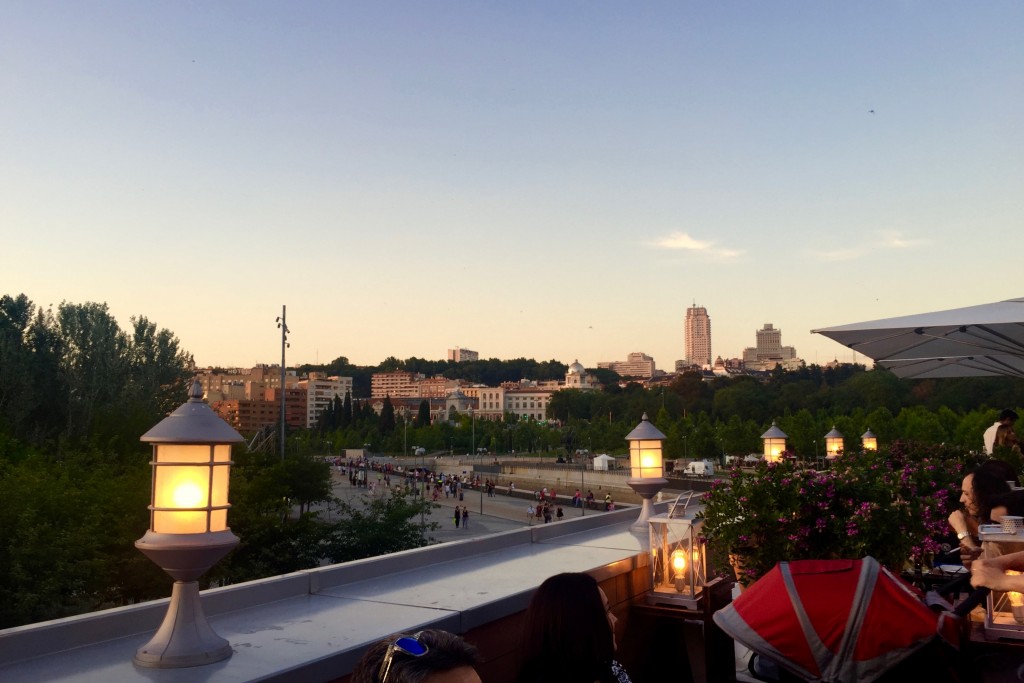
Once we’d finished our snooping we headed back once again to the central area of the city, where I introduced my dad to a luxury spot for afternoon tea which I myself had only recently been informed about, the hidden and aptly-named “Jardin Secreto” or Secret Garden which is tucked away on the roof terrace above a shop in the city.
You’ll have to take a second look at the image above when I reveal that the potted plant in the centre is in fact actually my dessert! The ice cream and Oreo crumble delight was served in a plant pot in such a realistic fashion that even I having ordered it still had to do a double take when the waiter popped it down on the table!
As the day wore on I wasn’t feeling too great, and so we meandered slowly through the city, picking up a light tea on our way home – however we didn’t pass up on the opportunity to stroll by the beautiful Prado Museum in the evening…
The next day began with something even I have never actually gotten round to doing before, even after having visited Madrid twice briefly and then having lived here for months – and that’s taking a lift to the top of the Circulo de Bellas Artes and admiring the views of the city from its roof.
After this we headed to the north of the city and to the funky district of Chueca, where we wound up on yet another rooftop terrace, this time of a market, and didn’t pass up on the chance to have a beer under the clear skies.
After this it was time to descend into the Metro system once more for a visit to the Temple of Debod (one of my favourite chill-out spots in the city) for a lurk around and to capture some views of the Royal Palace and Cathedral. Tired from another day of marching around the city, we decided to spend some time here, where my dad fell asleep on the grass and I spent the whole time flinching as the ball from a nearby volleyball game kept flying perilously close…
To finish off our last full day together in the city, I thought it’d be a nice relaxing journey to the Matadero, a huge arts and cultural venue built in a renovated slaughterhouse. Feeling sickly once again, I spent the most part of the day sat down on plastic chairs and lying on the grass looking up at trees. See below…
The day after I had to return back to work, but my dad managed to navigate the city with ease in my absence, and I’m sure he has taken many more photos which I still haven’t had chance to nag him for copies of just yet – Madrid life is busy as ever – I have just moved flats and am about 3 blog posts behind! For updates on that, as well as a visit from my friend Georgia, do stay tuned…
With the recent change of office at Erretres and the chaos that Semana Santa brought to the city, it’s been nice to kick back again once more (in a new flat, no less) and enjoy the mellow atmosphere of Madrid. I moved to my new flat about a week and a half ago, and I’m now living in a quaint little district called Quintana with my lovely new hosts, Pilar and Veronica.
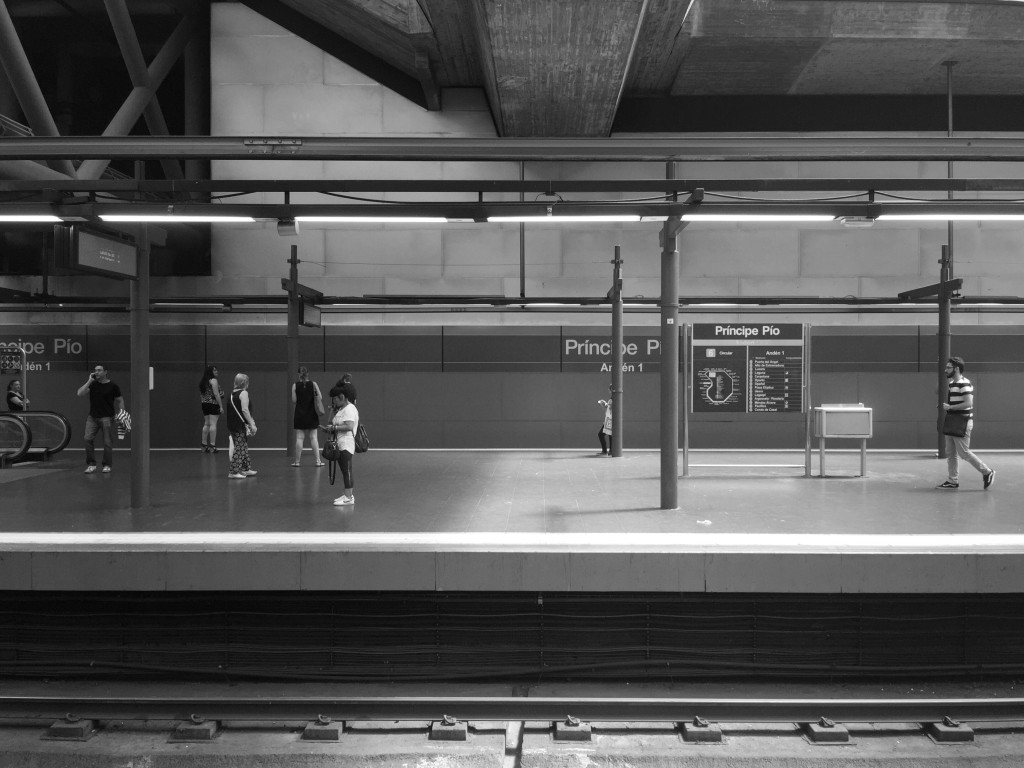
A new flat means a new route to work, and so now I alight the Metro at the almost annoyingly gorgeous area known as Ópera and Royal Madrid, and I have the laborious (ha!) task of wandering through the Oriental Gardens and past the Royal Palace en route to the studio.
It also dawned upon me that my time in the city is sadly finite, and so I should probably relax a little and begin to enjoy the sights and things to do that it offers, instead of spending all my time washing and cleaning and doing menial cooking of my own (let’s be honest) mediocre food. To this end I have been taking the opportunity to pay a daily visit to the Temple of Debod, which is situated right next to the studio, and which offers tonnes of grassy space, a fountain, stunning views over the west of the city and the huge public park “Casa de Campo”, and most importantly: lots of dogs.
Whilst there I have been proofreading an essay for Danni, writing my previous blog post about Easter in Madrid, and generally doing other bits of design work, such as a PDF guide for my parents to use on their phone when they visit – I will post a feature on that at some point once it’s done – I spent ages designing a matrix of 20 windows for the front cover!
Anyway, back to the streets of Madrid. After work this past week or so I have also been taking the opportunity to go on a mini culinary tour of the city, which was kind of forced onto me as one night I realised I was an hour from home and it was 10pm and I hadn’t eaten a thing since lunch – so I headed straight for Sol in the centre of the city and to Bacoa, the burger joint I tried when I first got here. It was as delicious as I remembered, even if I had to sit there for a while to digest…
Another evening I asked for recommendations from the team in the studio, and I was pointed towards Plaza Mayor, which I was a little dubious of as it is one of the main tourist traps, encircled by bars charging 6€ for a small beer. I headed through the square and onto a street behind it, and found the place I’d been recommended, La Toná, where everything was surprisingly cheap and delicious! I treated myself to a squid montadito, or small sandwich, and a plate of patatas bravas, potatoes in a spicy tomato sauce.
Life doesn’t get much better than tapas on a terrace with a lovely view.
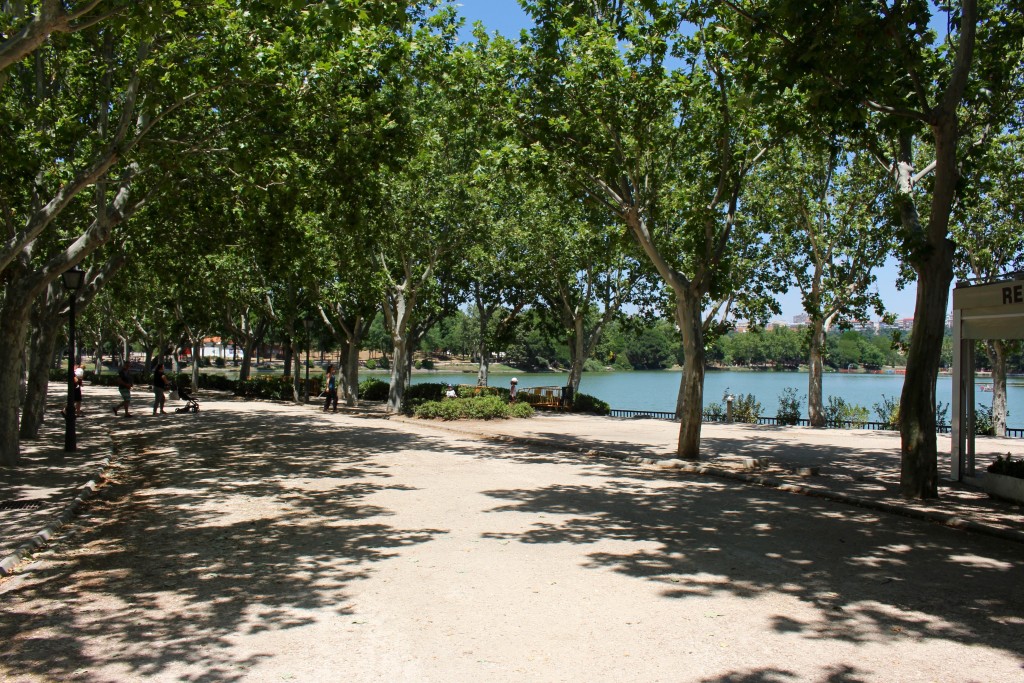
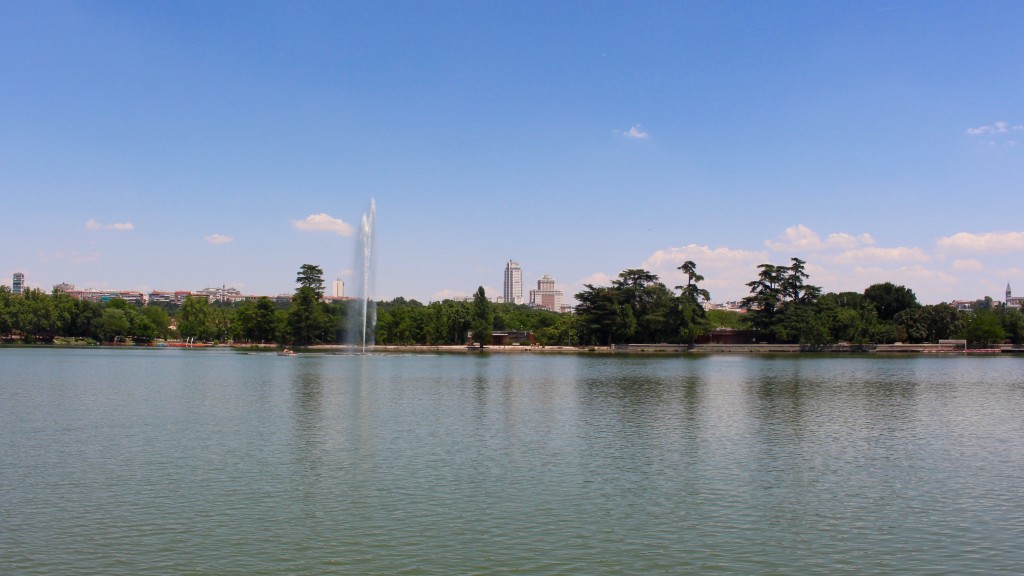
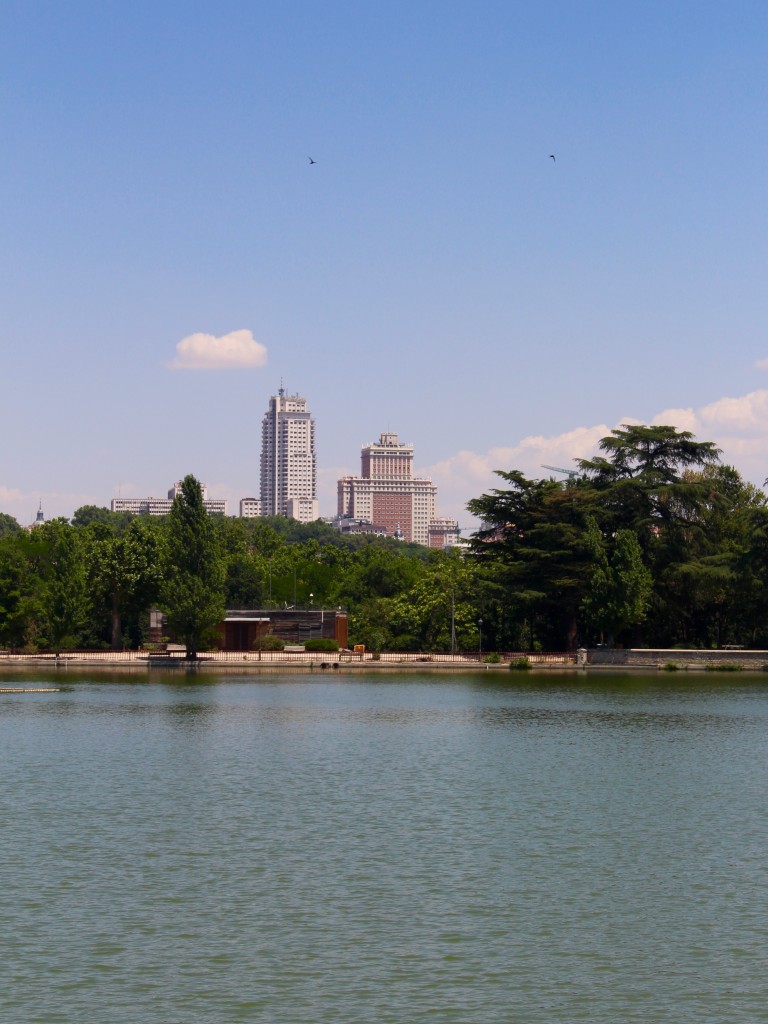
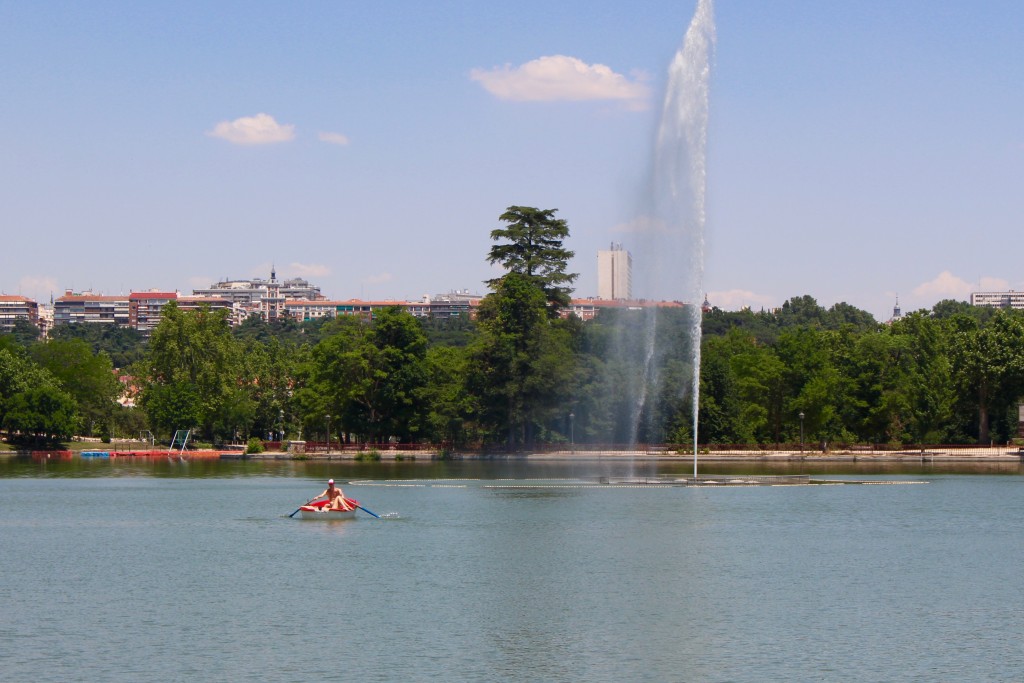
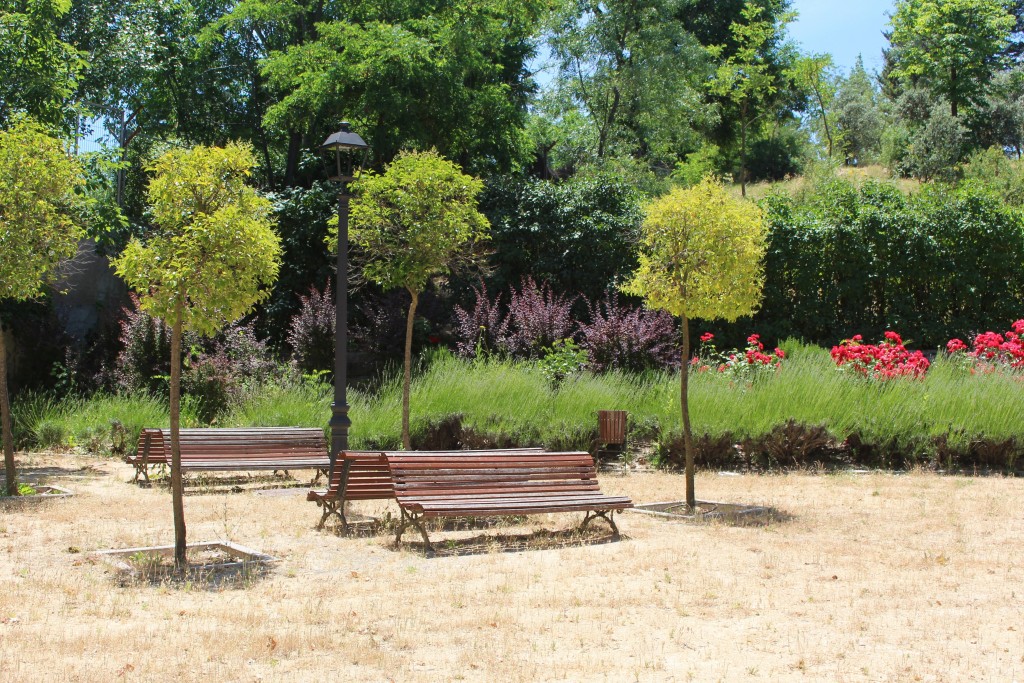
Pretty soon it was the weekend, and time to find something to do. Having been ill on-and-off for a while, I decided to take it easy and head to the city’s favourite chill out spot, Parque del Retiro. There, I found a beautiful spot to seat myself overlooking the boating lake and shaded by some trees, and proceeded to do pretty much nothing but sunbathe for a few hours.
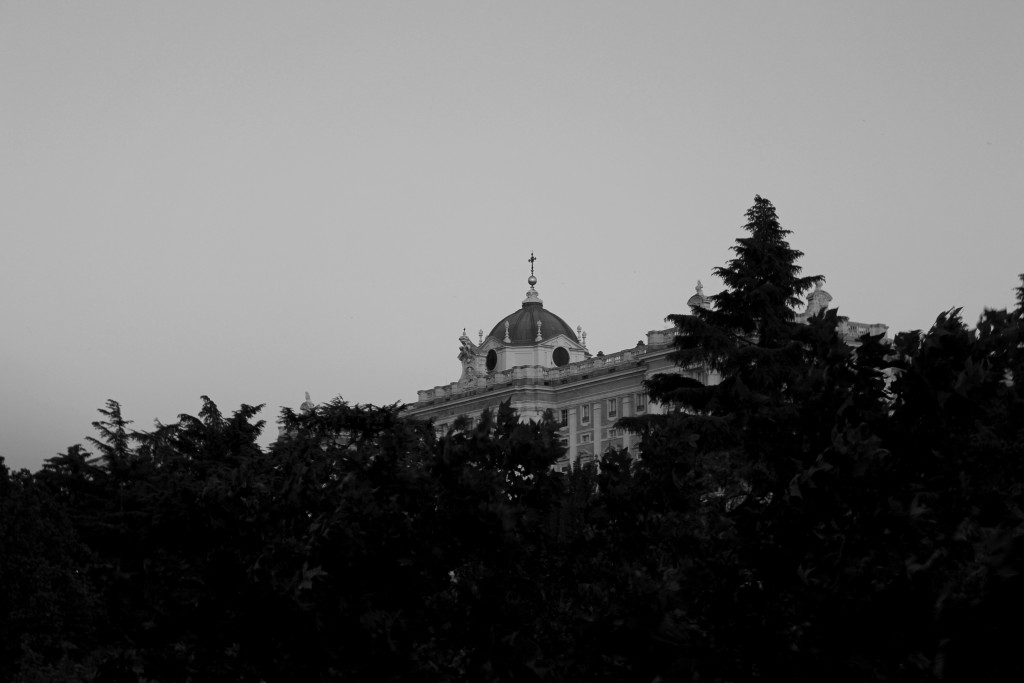
After a snoozy spell in the park, I decided to head back through the city on foot to take in some more of the Saturday afternoon ambience in the centre. Camera in tow, I visited one of what I think is the most interesting and beautiful spots in the city, a little plaza bordered by a smattering wildly differently styled buildings from Spain’s various eras of history. Here’s a (pretty bad) photo…
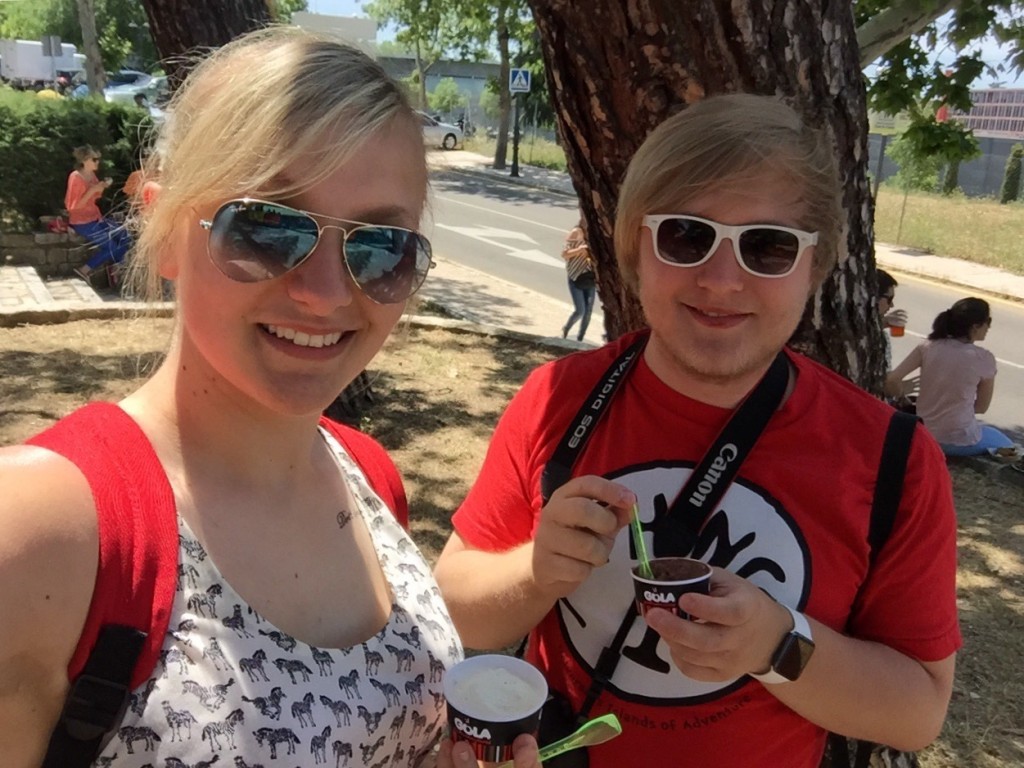
Hot weather calls for guilty pleasures.
On Saturday night I met up with my ex-flatmates Vero and Levin, plus some of their friends, and we headed out for an evening of tacos and karaoke! We started at one of my favourite spots, Taquería Mi Ciudad, where many tacos and margaritas were consumed, and then we headed off to the Barrio de las Letras where we sang Robin Williams very loudly and ate a tonne of pizza. It was ace!
It’s back to work for now though, where I’m working on some really cool but still very confidential new projects. I thought I’d also take the opportunity to congratulate the team on their work on Natsuki, which just received a glowing review on one of my favourite design blogs, Brand New, which you can read here. I take no credit for this piece – it was all pretty much wrapped up before I showed up back in February!
You can keep up with what we’re up to in the studio on our Instagram and Facebook – I’ll even be posting the odd thing! Until then though it’s time to grab an early night and sleep off the tonne of fresh bread I just ate. I never learn.
This is a very strange blog post I guess in some respects, mainly because most of the time I don’t post specialised pieces on design thinking, but also because even within the design community itself, typography in one specific language is a very niche subject to talk about.
My sudden feeling of need to explore the use the written in the Spanish language (I will be referring to Castilian Spanish throughout) without actually delving into the language itself (bear with me if you’re new to typography, you’ll get the hang of it soon) was spurred on by a sight I see every day on my way to and from working at Erretres, which is based near a beautiful plaza called Ópera in the centre of Madrid. At the entrance to the metro station for Ópera there sit two signs, a suspended one and one on the wall. Both are set in the standard Madrid Metro typeface, Helvetica, however one carries the accent as it should, Ópera, and the other has dropped the accent seemingly without a second thought, so the word has become Opera. As trivial as it may seem, it really got me thinking, so let’s explore…
The Spanish language makes use of the Latin alphabet, so there’s no surprising shapes or forms to throw us off too much as English speakers, except the extra letter which is included in the official Spanish alphabet:
A B C D E F G H I J K L M N Ñ O P Q R S T U V W X Y Z
The Ñ, written eñe and pronounced “en-yay”, is not considered an N with an accent, but rather a letter in its own right, and hence it occupies a place in the official alphabet. The letter comes from a double N, and came about when people began to place a tilde over the N as shorthand to indicate doubling, a practice which was formally introduced in the 1700s. The introduction of a new letter and accompanying sound based on the doubling of an existing letter may same strange, but remember that the English W came about as a doubling up of the letter V!
An interesting tidbit to note on the subject of the Spanish alphabet is that up until quite recently in 2010 the combinations CH and LL were actually considered letters in their own right also. This is due to the fact that Spanish has a near-perfect phonemic orthography, which is a fancy way of saying that each letter roughly corresponds to its own distinct sound when spoken. As CH and LL combine to form a different pair of sounds than their two letters would individually, it was seemingly felt they should be treated as separate, in order to maintain the phonemic orthography which the Spanish enjoy – they rarely have to spell words out for each other!
The other feature that Spanish possesses which English does not is the frequent and methodological use of accents. The acute accent (´) can be present on any vowel, and an umlaut (¨) is sometimes seen on the letter U, and so the complete set of accented letters is as follows:
Á É Í Ó Ú Ü
The most interesting problem brought on by these accents and extra letter is the issue of text colour. The colour of type does not describe the actual colour of the text itself, but the overall darkness of the text when it has been composed on a page or screen. This is primarily affected by the weight (boldness) of the font used, as can be seen in the example below.
As you probably agree, the central column is easiest to read as the contrast between the letters and the blank page is best balanced. The colour of text can also be affected by the space between the lines, or leading, as can be seen in the example below.
Here you probably agree again that the central piece of text is the most legible, as the lines flow together and your eye is able to quickly jump from the end of one line to the next. Too much leading and you will easily lose the line you were on, and too little and the lines and letters begin to mix into each other.
So how do the accents and Spanish Ñ affect the colour of the text? Well, as they consist of extra forms sat above the usually short lowercase letters, their presence makes the text ever so slightly darker in colour, as you can see in the example below.
Text left in English and accent use dramatised to demonstrate
It soon becomes obvious that with all this extra visual information making the text appear darker, it is necessary to compensate by adding extra leading. This also prevents the obvious issue of letterforms (the shapes of the letters) overlapping and running into each other, which is move likely with an accented language such as Spanish as you can see in the example below.
Accent use dramatised for demonstration
Another consideration with Spanish is the length of a piece of text itself. Something which maybe 10 characters in length in English may be 14 characters long in Spanish, as Spanish is on average around 140% as long as English text containing the same information. Although this may not affect how we actually typeset and handle text in Spanish, it is an important consideration when designing layouts which may be ultimately released in both Spanish and English, and something I had to consider for example when designing my portfolio (which is available in both languages).
The final peculiarities that arise when handling Spanish text arise with it’s punctuation. The Spanish language famously includes inverted exclamation and question marks (¡ and ¿) at the beginning of exclamatory or interrogatory clauses as well as the regular marks at the end. This is born of the fact that the Spanish sentence structure does not change to accommodate questions, and so “do you want?” and “you want” are written exactly the same. English uses the auxiliary word “do” to denote the start of a question, a feature Spanish lacks, and so the ¿ at the start of a question alerts a reader that it is a question rather than a simple statement, a signal which in spoken Spanish takes the form of a change in the voice’s pitch. The exclamation mark simply follows suit.
Another standout piece of punctuation is the Spanish treatment of quoted text and dialogue. Quote marks are sometimes used exactly as in English, for example “Hello”, however sometimes a pair of symbols akin to double chevrons are employed, for example «Hello». The third and perhaps most baffling method of denoting quoted text or a change in speaker is the use of a long dash, or em-dash to be precise. It can be used with line breaks (a new line for each speaker) or without line breaks, as you can see below.
—Voy a ver una película— él dijo, pero ella le dijo —No puedes ir—
—Voy a ver una película —No puedes ir —¿Por qué no? —Tienes que lavar los platos
Although the Spanish use of punctuation may not have any real consequences for a typographer or anybody handling the text, it is important to understand the grammatical quirks of the language in order to avoid errors when trying to work with text not set in your native language.
And so concludes my quick overview of typographic considerations when using Castilian Spanish. Although not intended to be a fully researched and thorough exploration of the subject, hopefully it has been of some interest to anyone inquisitive about the world of typography, graphic design and the Spanish language!
I write to you today from the relaxing shade of a palm tree, next to an ancient African temple (which was moved to Madrid brick by brick), overlooking the vast expanse of the Casa de Campo park, and with lots of happy dogs running around me – just another day in Spain!
With the last update focused mainly on work, I thought I’d divulge a little bit of Spanish culture and what I’ve been up to when not working really hard (questionable) in the office. As many of you may have celebrated Easter recently, you’ll be aware that that all those festivities have been ongoing, however I can assure you that Easter in Spain (or Semana Santa, hence the title) is celebrated in a completely different way…
First up, and for me rather disappointingly, there’s no chocolate. I have only seen chocolate eggs for sale twice in the past few weeks: both times in the English food section of El Corte Inglés, and both times with exponentially high price tags. Secondly, there’s the parades.
The parades, or procesiones, are really not to be missed, and so I dragged my (rather ill at the time) body to the city centre and grabbed a coffee and waited for the drums to begin. As the drumming drew louder, people began to move into formation, lining the edges of the streets. Sooner or later the drummers arrived, faces completely veiled, followed by a small brass band.
The music is very loud but also touchingly solemn, as here Easter is treated more as a time of mourning and self-sacrifice, hence the veils and robes with the famous pointed hoods. After the music comes the rhythmic procession of the imagenes, which are beautifully intricate depictions of various biblical scenes, held up by a group of people with strong arms and plenty of stamina…
The movement of the parade is accompanied by the rhythmic beating of a drum, the periodic ringing of a bell to coordinate those carrying the images, and the respectful silence of the throngs of people watching the spectacle. The pungent smell of frankincense fills the air too, as the hooded figures slowly make their way past, swinging lanterns of the burning resin in their wake. The atomshere created by all this was particularly amplified by the darkness of night, which I experienced as I made sure to catch one just outside Plaza Mayor.
As the procession drew to a close, people were invited onto the street to follow it further along its trajectory. I took the chance to join them as they sauntered through the Plaza del Sol, right in the centre of Madrid, and I’m very glad I did as it was a surreal and moving experience – I have never seen so many people in the square!
One last thing of note before I turn in for the night, and something without which one of my blog posts would not be complete, is for me to talk about food. During Semana Santa here in Madrid it is customary to eat a sweet treat known as torrija, which is stale bread soaked in cinnamon and sugar infused milk, which is then fried generously in olive oil and coated in yet more sugar and cinnamon.
Having already tried torrijas out a few times at work, I knew that they were delicious, and so I thought what better way to celebrate Easter Spanish-style than to try my hand at whipping a few up myself? Having let my bread go stale overnight, I dropped the cinnamon sticks into the milk, and an hour later I was packing the torrijas into a box to take into work the following day.
Surprisingly the torrijas were a hit in the studio, and amongst my flatmates, and I must say that I did enjoy eating a couple myself! But as I ride the crash that has come after the sugar-high of the Easter weekend, I must unfortunately bid you adios until my next update, where I’ll be moving flats once more… Until then!