It’s the weekend, and I’ve just finished my internship with Sky Sports, and what a busy time it has been! Upon my arrival I was presented with a brief, and then for the duration of my stay I was labelled as the ‘internet of things’ intern.
I started by researching what the new trend of the ‘internet of things’ may have in store for us consumers over the next few years, exploring devices which are just entering the market such as the Apple Watch and connected home appliances (see Amazon’s recent announcement of the Amazon Dash).
The ‘internet of things’, for those who may be unfamiliar with the term, describes the recent trend of having everyday appliances and electronics connected to the internet in order to imbue them with more functionality: think a fridge that could text you to say you’re running out of milk or a plant pot which will email you to water the plants. It sounds like science fiction, but those familiar will be well aware that the internet of things and home automation are rapidly taking off. Just this morning I ordered the Apple Watch, a device which will tap me on my wrist to let me know when there’s something that needs my attention.
Over the week I wound up designing a whole new live sports experience, integrating with a range of Sky’s existing products and services. I have to digress now, however, as I am bound to secrecy – but some of the work will make its way on to my portfolio once I have collated it and it has been green-lit by the Sky Sports team.
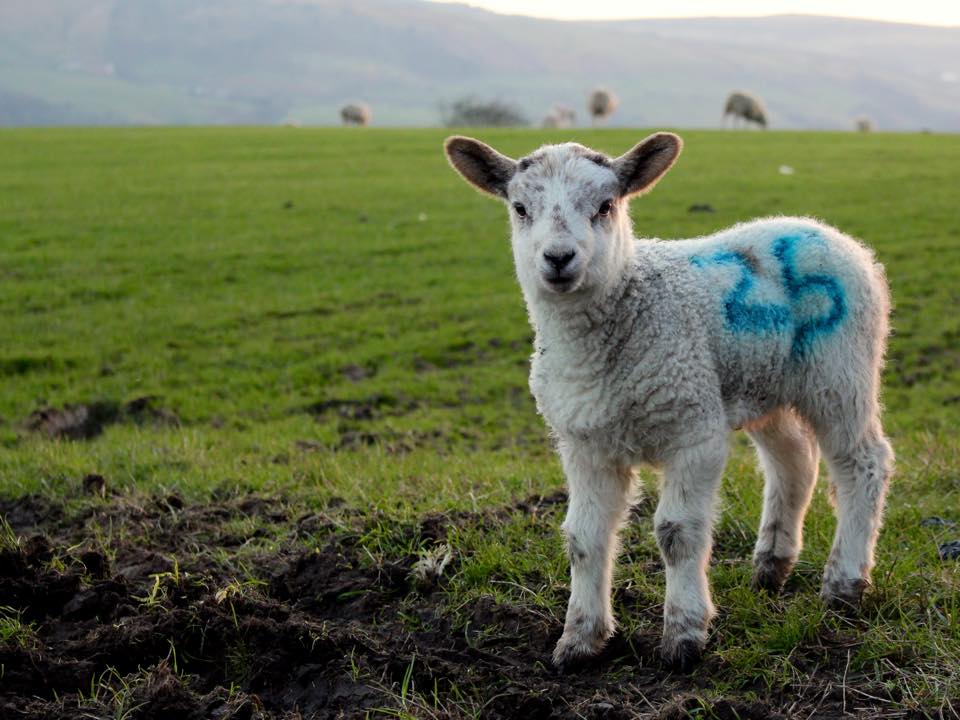
And so in other news I am writing this as I sit on a (very delayed) train back to the green land that is Worsthorne, where I captured this adorable little lamb on my new camera as I went a-wandering a few days ago.
Over the coming week, before I return back to Leeds, I shall be completing my latest brief: designing a cookbook for an undisclosed client…
I apologise that this post doesn’t say all that much about anything, but I wanted to keep you as up to date as I could whilst sinking ever deeper into pool of non-disclosure agreements. Ahh – the joys of work!
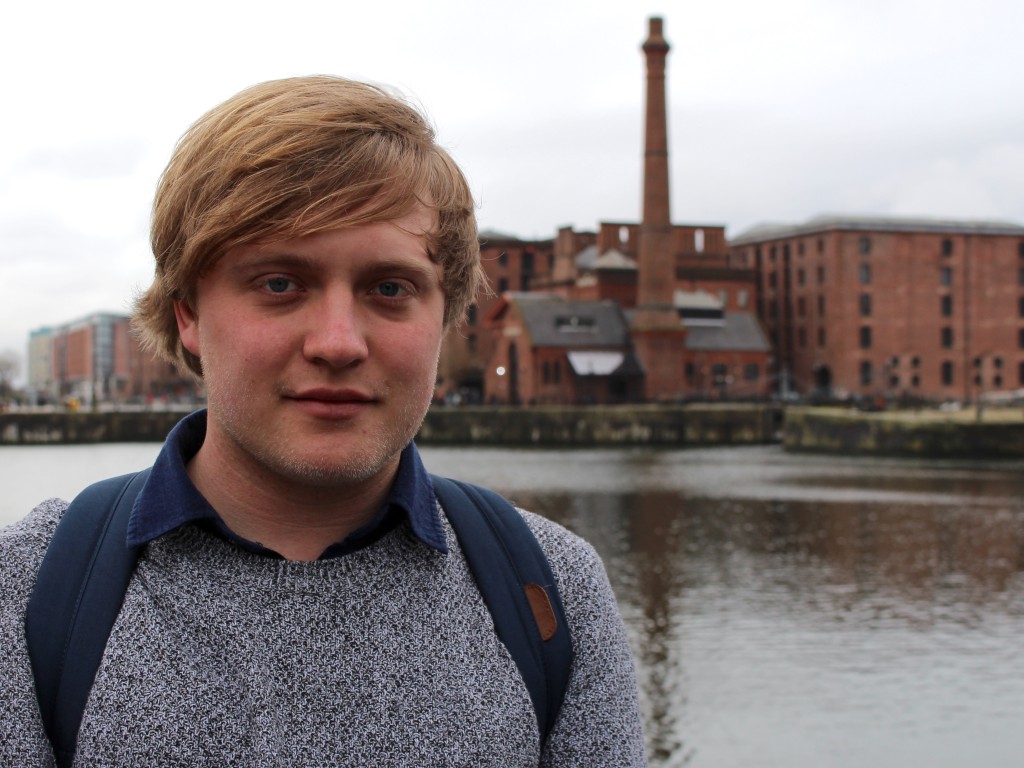
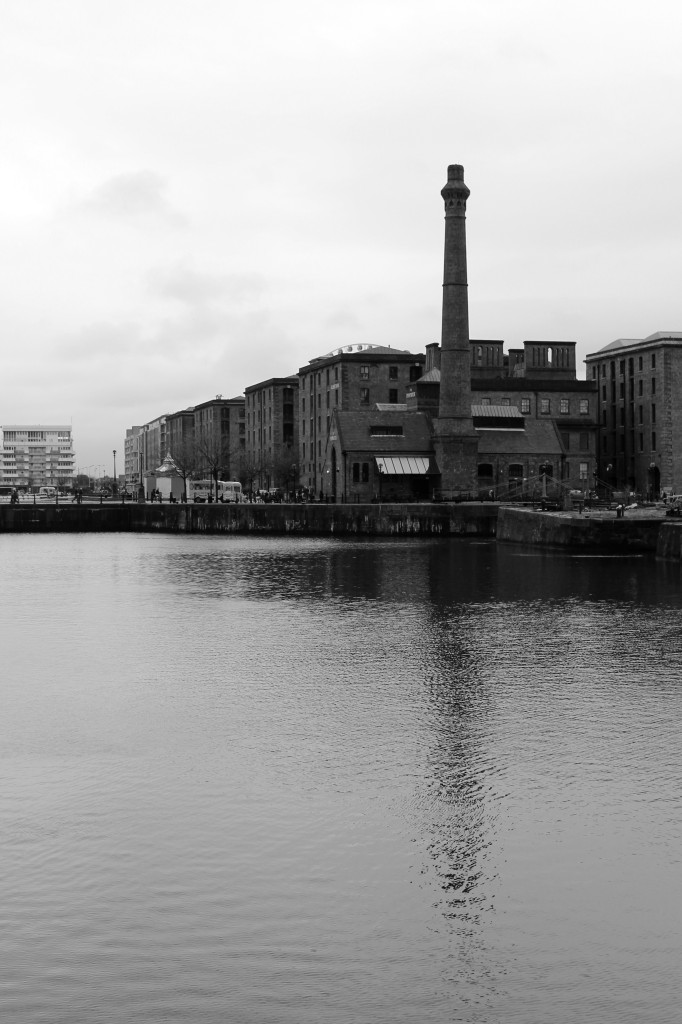
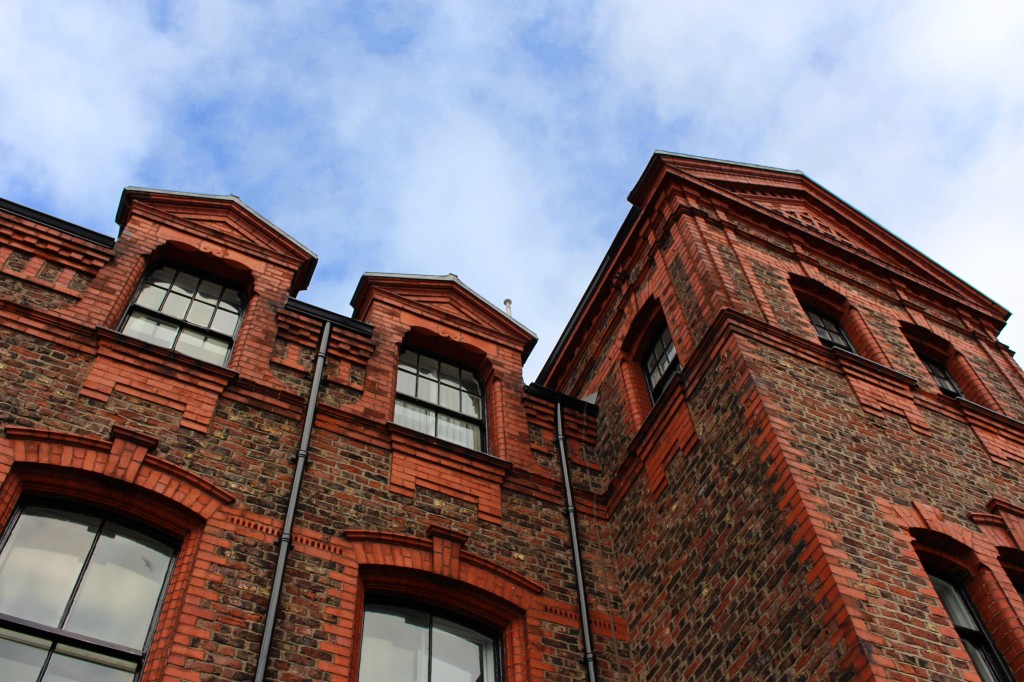
So after years of being possibly the only graphic designer in the world ever who operates without owning an actual camera, I took the plunge the other day and ordered myself a DSLR, which promptly arrived on my doorstep with a user manual as thick as a bible. Defiant in my ability to work it out as I go, I joined my parents and sister on a trip to Liverpool the very next day…
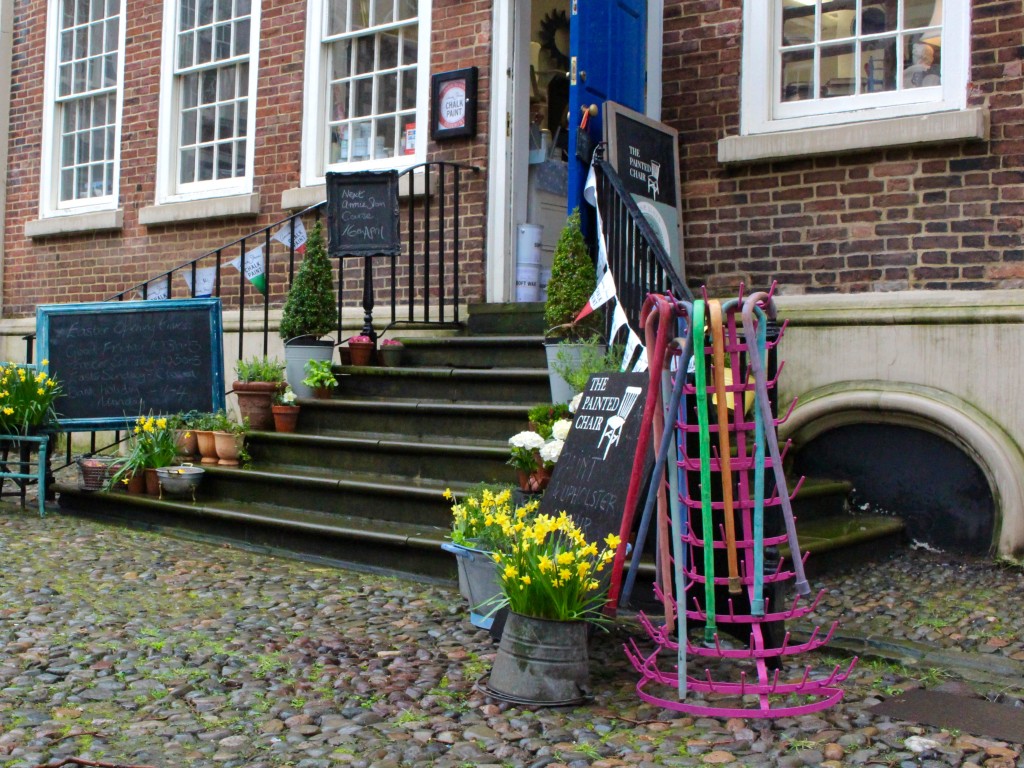
We visited many of the same places as the last time I visited the city, which you can read about here, but I was sure to explore Bold Street (an independent district) much more thoroughly this time!
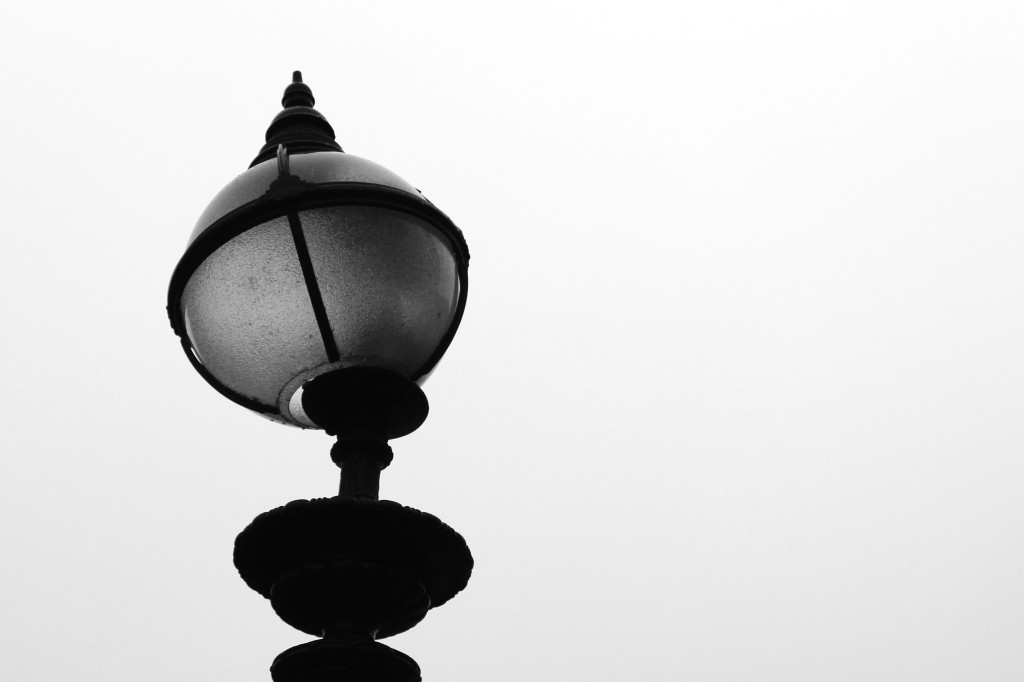
For those interested, I got myself a Canon 700D, and all the photos in this post were taken with it.
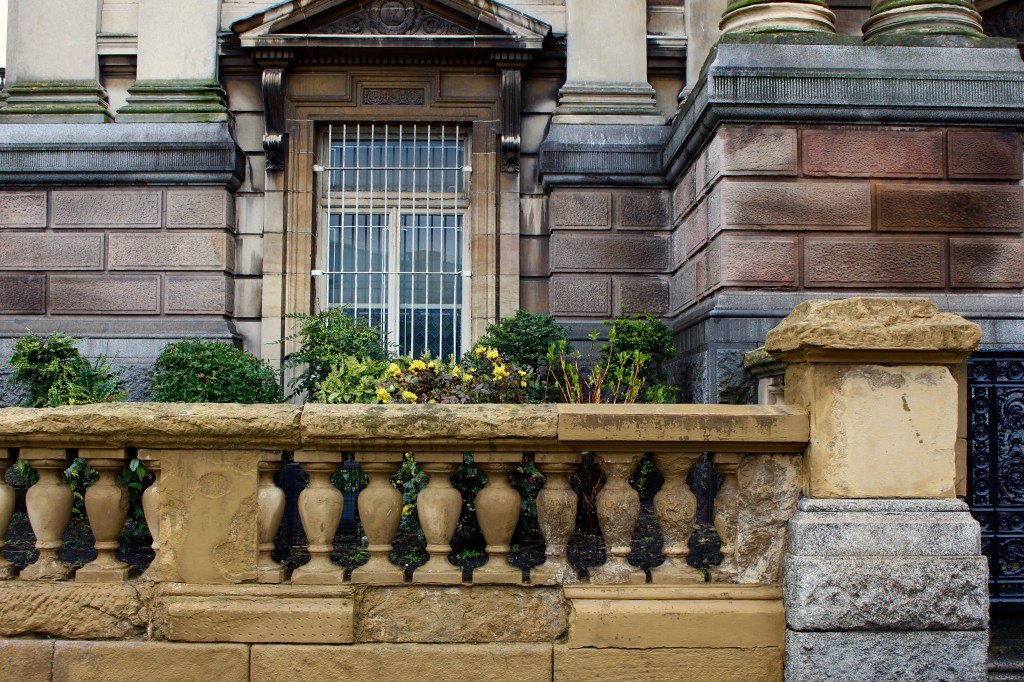
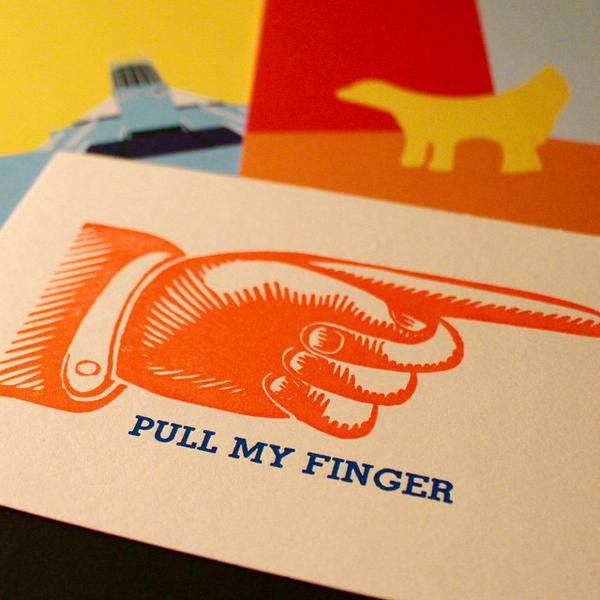
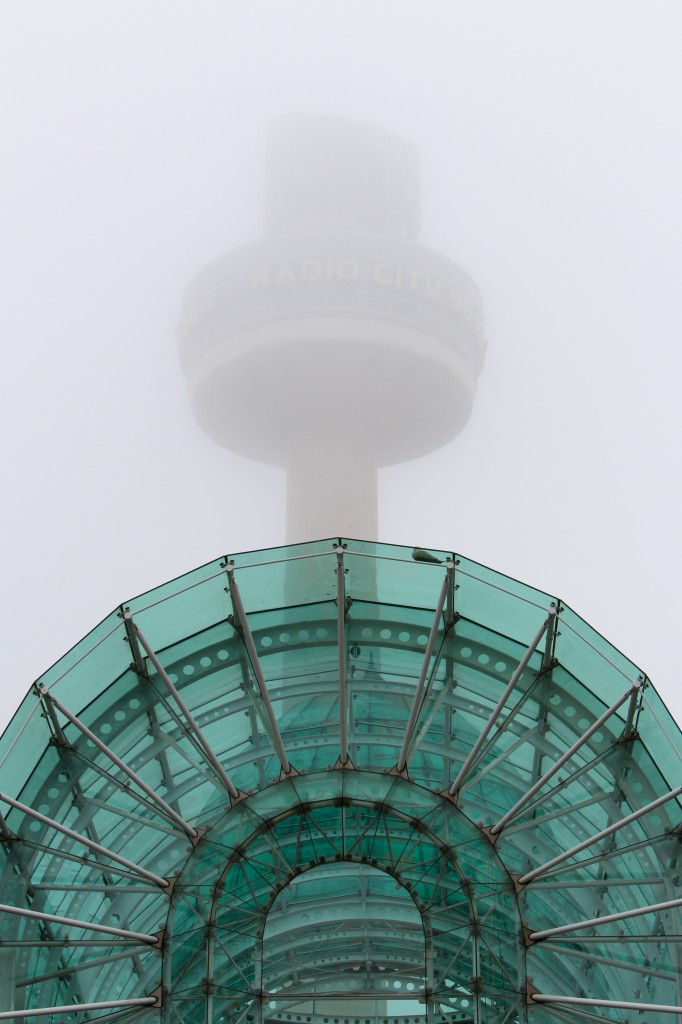
We ventured around Wellington Column and St. George’s Hall before heading down to St. John’s Garden, and then we headed into the city centre for a spot of shopping. I found a little art shop and had a field day in their bountiful pen section, spending £20+ on some new white finalisers and calligraphy pens for some hand type experimentation. I also picked up a few lovely prints, including a card that I have posted off to somebody…
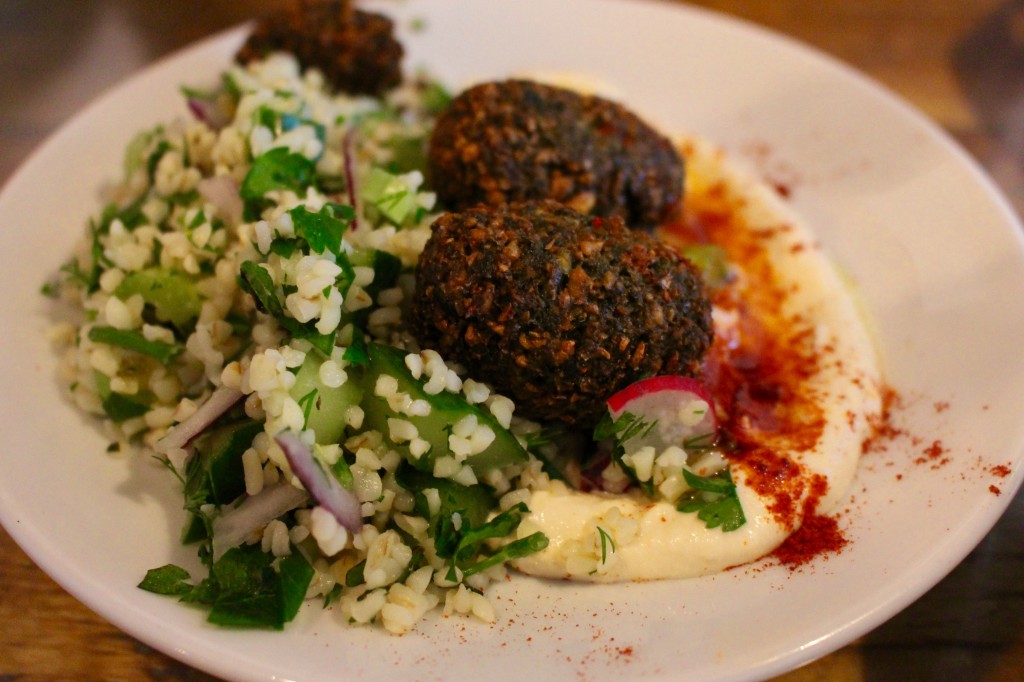
Me and my dad then headed for a spot of lunch in the lovely little Falafel & Cocktail shop, Malay. Ordering four small dishes between the two of us, we enjoyed a section of vegetarian and meat dishes, which were delicious!
We then left Bold Street, headed for The Bluecoat for a nosey round their photography exhibitions and a coffee break. It was a welcome break from the rain that had begun to dampen my exploratory spirit, and – rather worryingly – my camera, and provided an opportunity to import my photos via SD Card on to my iPad. This gave me the chance to edit some of my favourites so far, just using iOS’s inbuilt photos app, which I used to quickly edit down all the photos in this post.
We then, of course, headed further down to the docks, where I got a bit shutter happy, but also found a lovely book entitled “Read This Book If You Want To Take Great Photographs” which I promptly purchased.
Upon my return to good ol’Burnley, I emptied my bag and set about editing the camera photos (the fruits of which you have just been scrolling through) and also my very first attempt at some hand typography, which I shall post soon as a separate post!
Now I’m gearing up for my week working with Sky Sports, whilst organising my laptop and pulling together some more blog posts for you all. I haven’t forgot about my Paul Rand post, I shall be hopefully posting that later today! Until then…
Now that I’ve finally bought myself a proper camera, I thought I’d try out some photography whilst listing a few of the items that I just cannot leave home without. And so, without further ado, on with my list…
iPad Mini
My trusty companion for when my laptop is just too much bulk to lug around. Mainly used for Spotify, catch-up TV on the go, and the occasional doodle on 53’s Paper app.
53 Pencil
Wherever my iPad goes, so does this little beauty. Paired with the companion Paper app, offers a hi-tech replacement for my standard notebook. Speak of my notebook…
Waldo Pancake Notebook
Not only are these notebooks quirky and fun, the double spreads including both plain and ruled decent weighted paper make for a lovely day-in, day-out working notebook.
Lush Lip Service
Especially relevant with the current winter winds, I am always sure to carry a pot of this in my left pocket to keep on top of my terrible skin.
iPhone 6
My trusty phone, kept in sync with my iPad and MacBook with the beautiful service that is iCloud. Most frequently used for photography on-the-go and enjoying my latest Spotify playlists.
Bento Box
For lunching in style and keeping portion sizes down, my newly acquired Bento Box from MoMA is perfect. Usually found thrown in the bottom of my bag holding mackerel salad or tuna sandwiches.
Water
I drink a lot of water, so you’ll always catch me in a bottle. I don’t know what else to say about this one.
Apple Keyboard
A perfect companion for my iPad for on-the-go working, I chose this over any iPad case as it’s the same size as the keyboard I am used to on my Mac.
Lush Dream Cream
A lovely moisturiser for my uncooperative skin, which I tend to decant into smaller containers for portability. I am not afraid to smother my lips in this stuff too should I lose my Lip Service.
Mifa Bluetooth Speaker
Small but powerful, this is useful for broadcasting my Spotify playlists as loud as possible to anyone in the vicinity. Being a thoughtful person, however, this is mainly reserved for car and private use.
Comb
Cheaper than getting my hair cut as often as I probably should.
During my traversing of the internet in search of the latest in design research and semiotics, I stumbled across a recently published finding by the Georgetown University Medical Centre in the Journal of Neuroscience, whose principal discovery was that the brain recognises whole words as images rather than processing each individual letter.
For me, this latest discovery challenges many areas within graphic design and typography. Erik Spiekermann recently very publicly denounced Apple’s decision to switch OSX’s system font from Lucida Grande to Helvetica, however with Helvetica’s widespread popularity, maybe this change is actually a move in the right direction? For if our brain is used to processing words as particular forms (arguably most likely set in Helvetica with it’s adoption for iOS), surely it makes sense for other systems to copy the style, so that our brains may quicker recognise a given word in Helvetica’s distinctive form?
I do understand that the above hypothesis completely disregards typographic considerations such as distinguishability between different glyphs (see Spiekermann’s analysis using the word “millimetre” here) and issues regarding the reproduction of lighter fonts on lower screen resolutions, but it’s just a suggestion.
It also pulls Microsoft’s choice of all-uppercase and all-lowercase typesetting for it’s latest office products and Windows Phone OS (respectively) into question. If our minds are accustomed to recognising text set with standard English capitalisation, it makes little sense to make them work harder, especially when we are subconsciously trying to select menu items such as is the case with the menu bar in Microsoft Office 2013…
The all-caps menu bar in Office 2013
The recent trend of bloating the screen sizes and pixel densities of devices also presents interesting arguments for and against the avoidance of older typefaces which have not been designed for screen use. With screen resolutions edging ever closer to the point by which pixel screens are undistinguishable from printed material, is (or will) the production of typefaces constructed specifically for on-screen use even be necessitated any more?
Here I am reminded of Susan Kare’s “Graphical User Interface Icons”, completed for Apple in 1982, which I saw at MoMA in New York last week, and am hence reminded how far we have come since the boxy restrictions of the low-resolution screens of yore. Will modern day pixel-fitting, an art reserved for perfectionist designers such as myself, be necessary for much longer in a world of HiDPI (high pixel density) displays?
And then, with the ever-expending screen sizes of both portable devices (see: mobiles) and fixed devices (see: TVs/desktop PCs), must we worry anymore about typefaces having to work at such small sizes? Some of the most beautiful examples of typesetting I have stumbled across on the web, such as Medium, embrace much larger font sizes, in the case of Medium’s Article Pages (example here) almost doubling from the standard paragraph font size of 12pt (unformatted HTML) up to 22pt.
And so as years pass and larger, HiDPI displays become the norm, will we be waving goodbye to the need for screen optimised typefaces? And with this latest discovery questioning what we know about semiotics and typography, will it even matter? Can Apple be justified in it’s thorough and liberal implementation of Helvetica everywhere, and can we all now be justified in using our favourite print typefaces on screen?
Feeling as I did on Saturday en route home, I assumed that this post would never see the light of day due to jet lag, but here it is, in all it’s American glory. For the less observant amongst you, I have just returned from a four day stay in the great city that is New York, and I bring back a host of anecdotes and photos for your pleasure. It’s garuanteed to be a long one, so grab some popcorn or sweetscandy and have a jolly old scroll down.
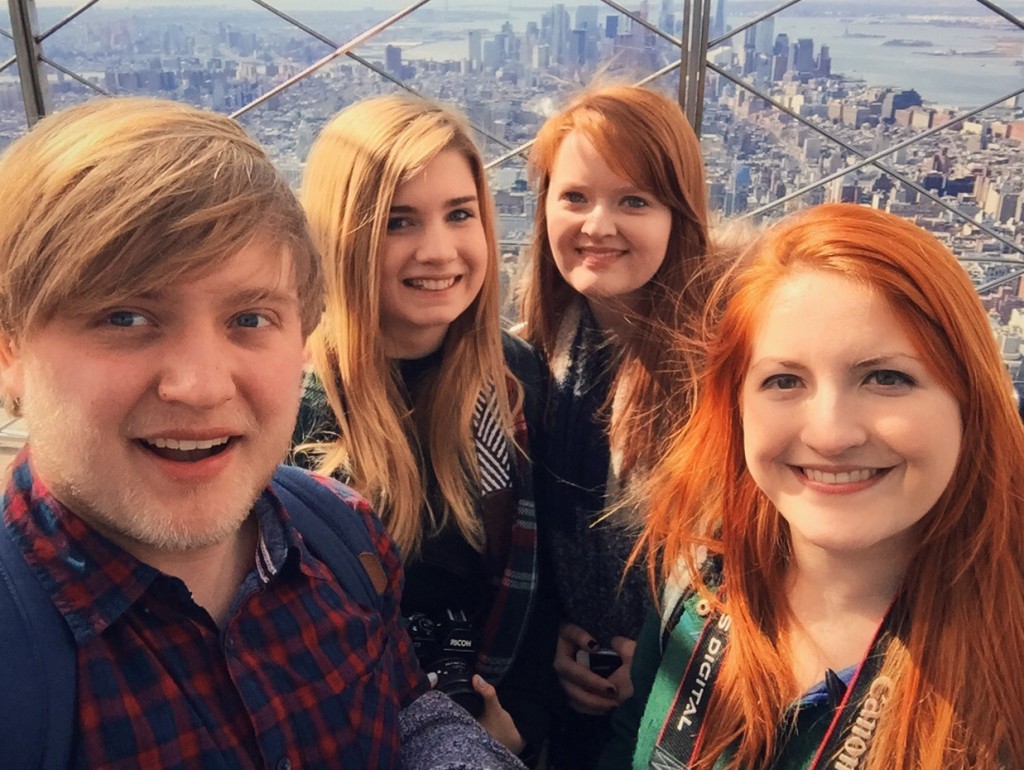
Our trip started with us (myself, Luisa, Izzy and Em) landing (precariously due to some feisty turbulence) in New York JFK. Pumped up on orange juice and tea courtesy of BA, we boarded a coach and passed through Queens to land at our hotel in the centre of Manhattan – just across the road from Maddison Square Garden!
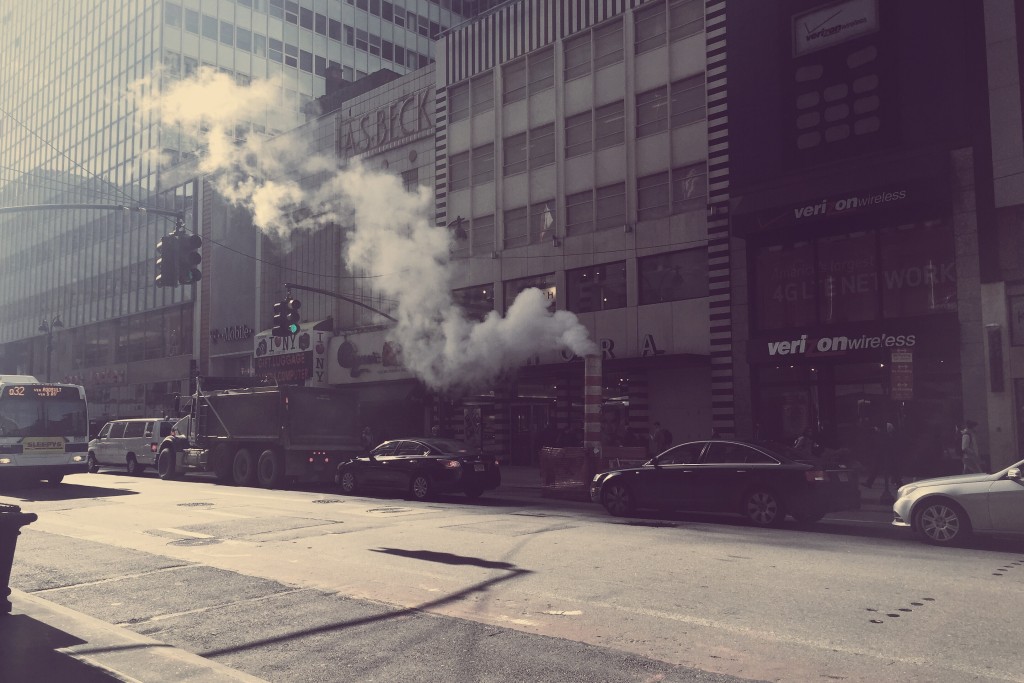
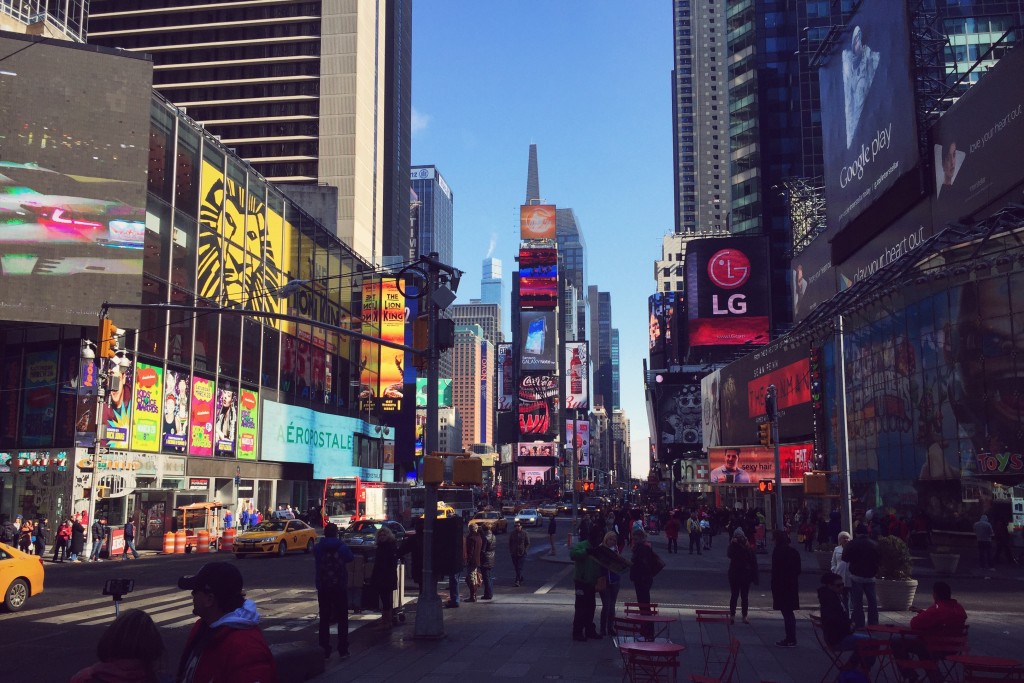
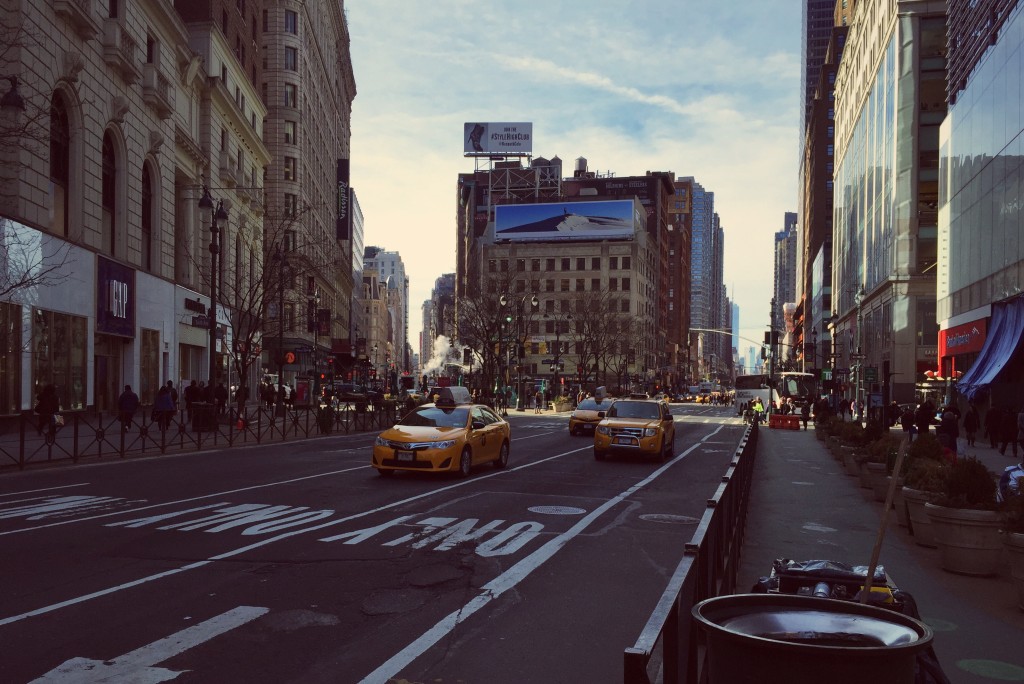
New York was initially all I expected it to be – busy streets stretching traffic police to breaking point, pedestrians treading on each others’ toes and unidentified smoke billowing from every other manhole cover. Wasting no time, we dropped our bags in the hotel and headed north up 7th Street to the infamous Times Square.
Hungry and tired, we headed to Ruby Tuesday and enjoyed a delicious dinner accompanied by bottomless raspberry flat lemonade. It was heaven. Anyway, after our very filling American-sized meal, we decided to dance it off as we headed back to the hotel…
The next day we decided to dedicate to a whirlwind tour of all the good ol’ tourist traps, and so we headed off with a plan to visit the top of the Empire State Building, the infamous NY Apple Store, Central Park, Paul Rand’s “Everything is Design” exhibition, and even brave a ride on the city’s infamous subway system.
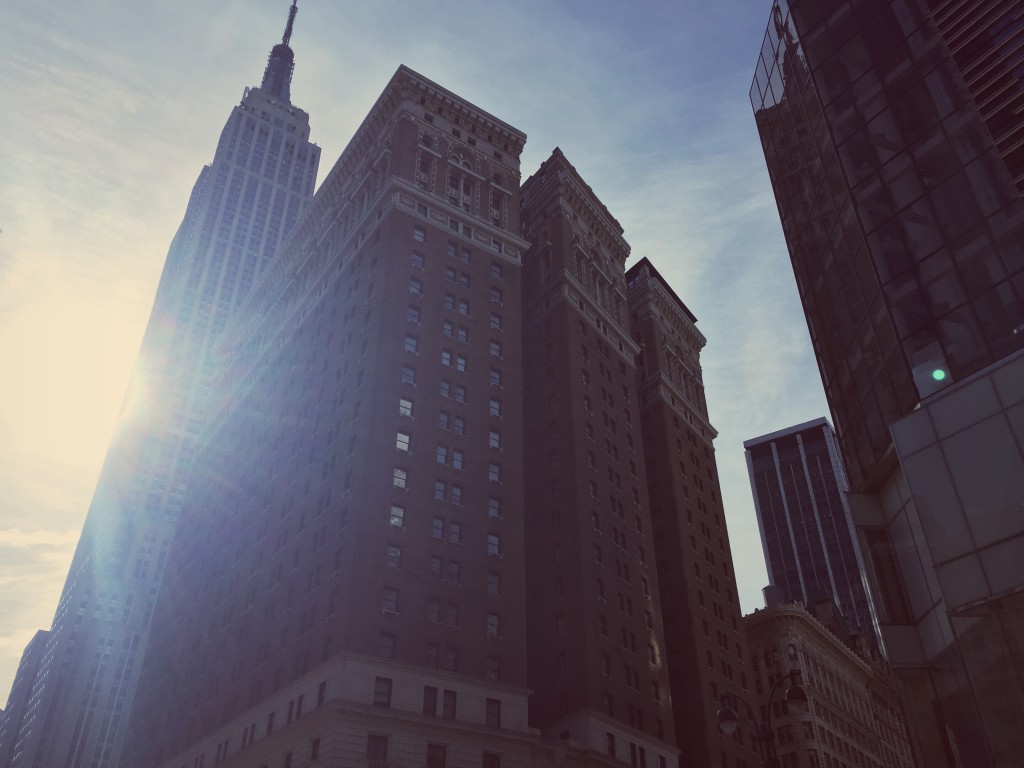
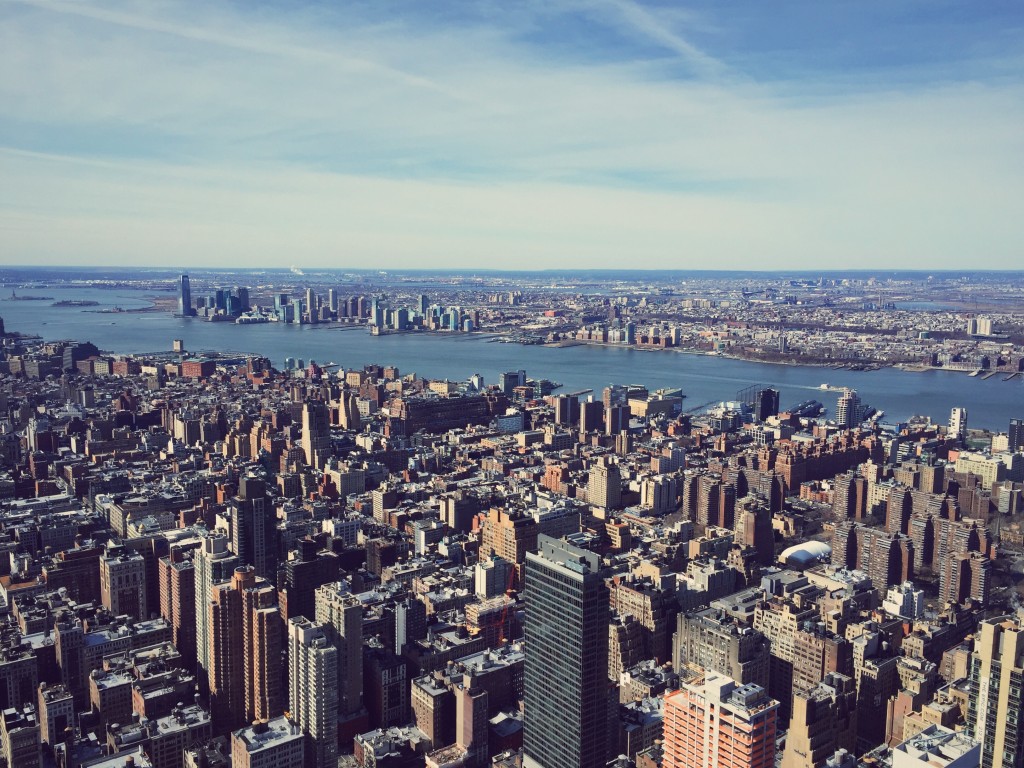
First up, then, we visited the 84th floor of the Empire State Building, which was located just around the back of our hotel after crossing Broadway. Here are a few photos of our journey…
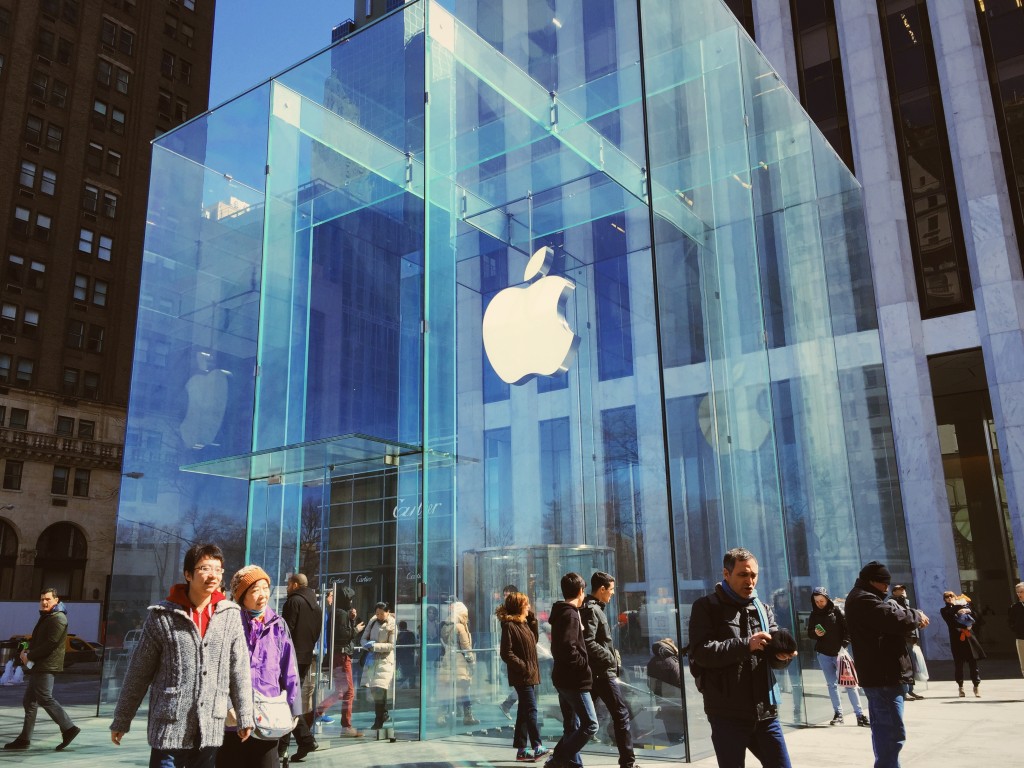
After soaking in the breathtaking views, we headed uptown along 5th Avenue and soon arrived at the corner of Central Park to see the infamous glass cube of the Apple Store. I spent a while admiring the architecture, the girls spent a while making good and proper use of the free WiFi, and then we headed on our way once more…
Once we’d crossed to another corner of Central Park, we grabbed the northbound Subway to further north along the edge of the park. I have to admit that I felt a lot safer down in the Subway than I would have thought, however the NY Subway map ain’t got nothing on Harry Beck’s masterpiece that is the London Underground Map.
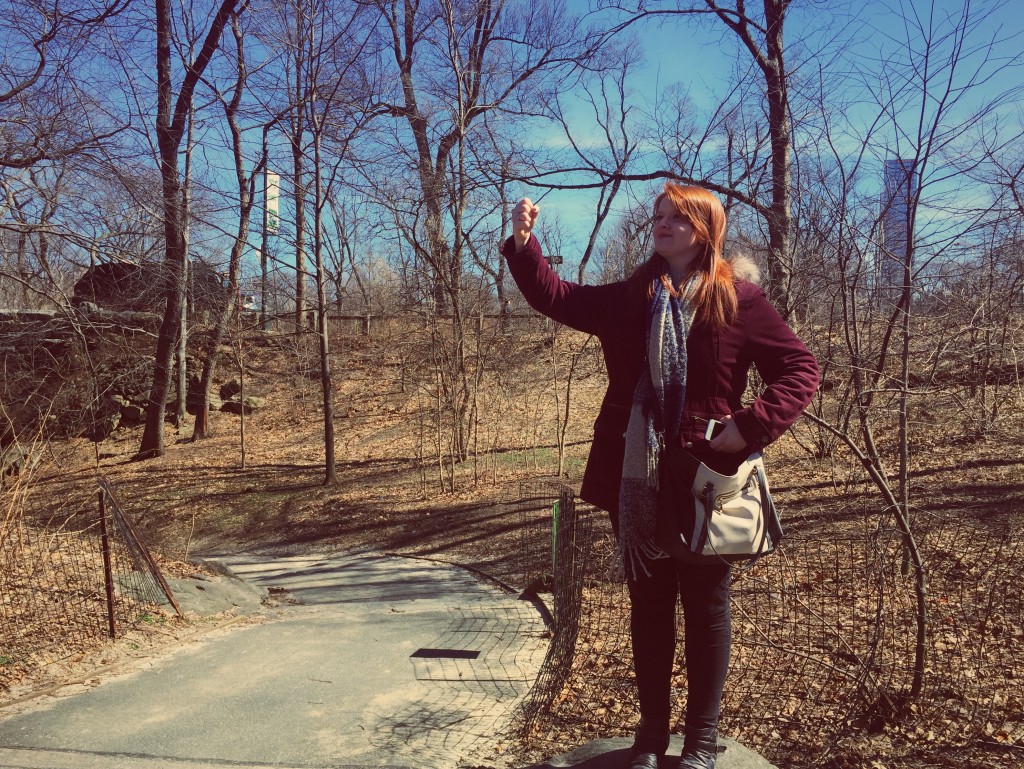
Once we’d resurfaced we headed into the depths of Central Park, where I found a strange looking seed-type thing, and Em assumed role of Statue of Liberty as we knew we’d have no time to grab a boat out to see her in person. I think she did an astounding job. Felt like the real thing. You go, Em.
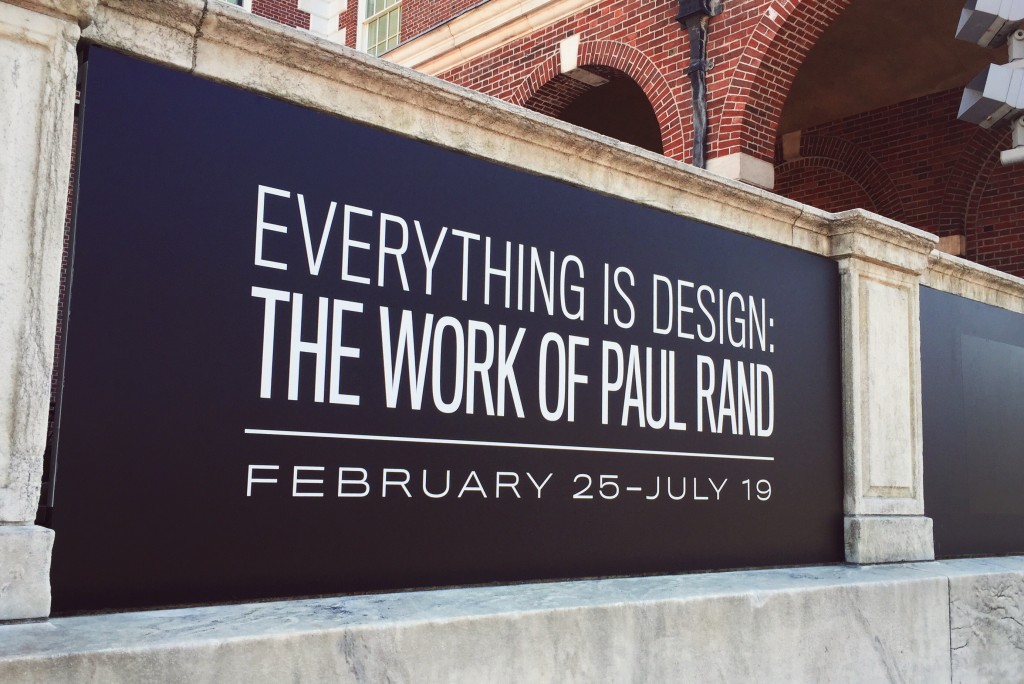
After a leisurely stroll through a rather barren Central Park we arrived at the other side, and wasted no time in heading into the Museum of the City of New York to see the Paul Rand (yes, the Paul Rand) “Everything is Design” exhibition. I leave you with this teaser photo, as I shall soon upload a blog post dedicated solely to the exhibitions we encountered in New York and link it back here. Watch this space…
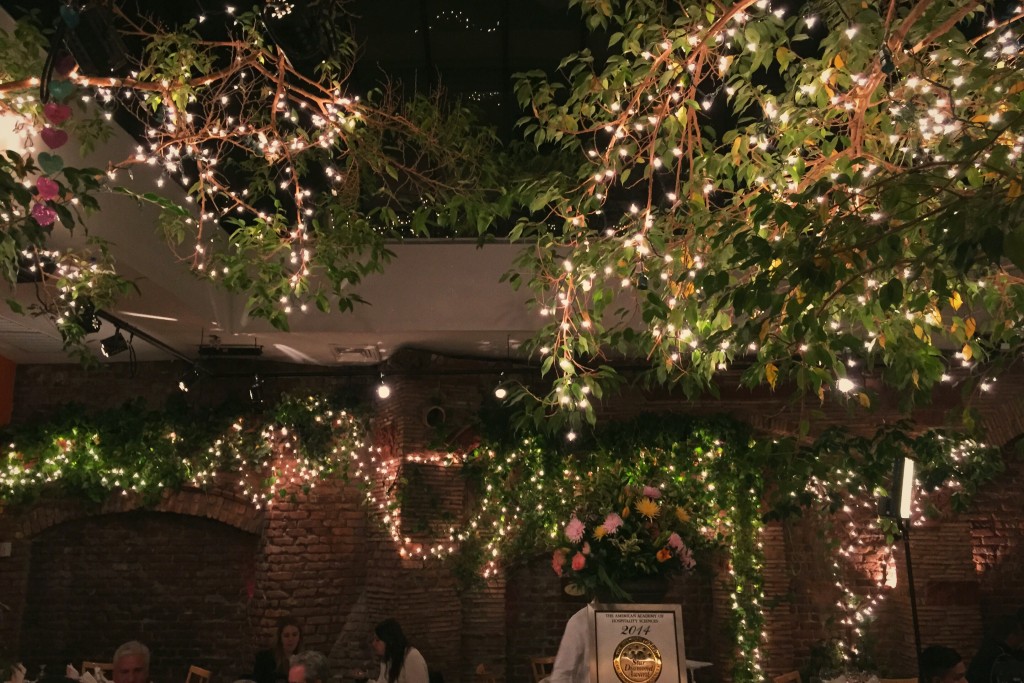
After an inspiring few hours spent in the museum, we headed back downtown once more and then headed out for an evening meal, for which we’d decided to head to Little Italy or Chinatown. We ended up in Little Italy, where we darted into a lovely little family-run Italian with a gorgeous garden room, and nearly ended up as extras in a film which was being shot there!
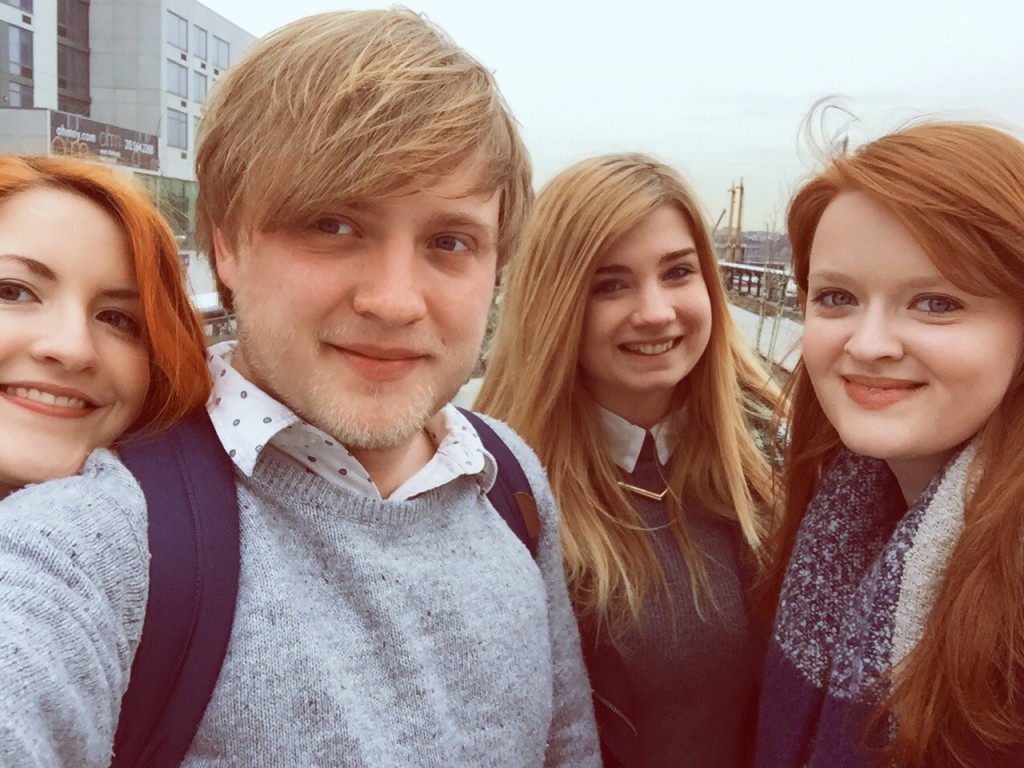
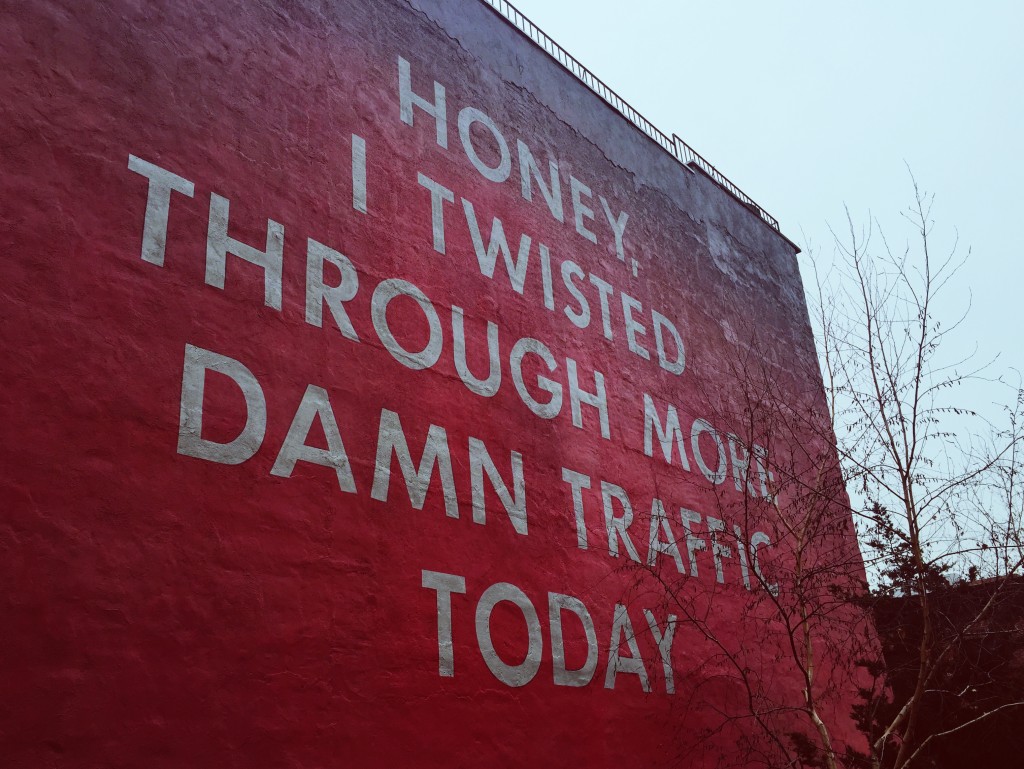
The next day we had two design studio visits lined up, firstly Vault49 and then Exposure – however before we headed downtown for these, we headed east and climbed up onto the High Line, a once-abandoned stretch of arial train line which has been converted into a beautiful urban garden-cum-walkway which winds its way down the east side of Manhattan.
After this we headed back west and encountered another landmark, the Flatiron building, before heading up a manually operated lift to the Vault49 studio. Here was held a presentation and talk from an ex-Leeds student from our very course, who talked about Vault49’s culture and work, all of which inspired many ideas for my placement search for my Year In Industry!
After this, and a huge burrito and a play in the LEGO store, we headed further downtown and onto south Broadway to find Exposure’s studio and offices. Here we were delivered another talk and engaged in a discussion, in which the Creative Director Tom sat down with us for a while and gave us some top tips on how best to approach studios when looking for placements. It was another great visit, tainted only by the fact that Steven (an Exposure employee and ex Leeds student) supports Blackburn FC. You win some, you lose some I guess.
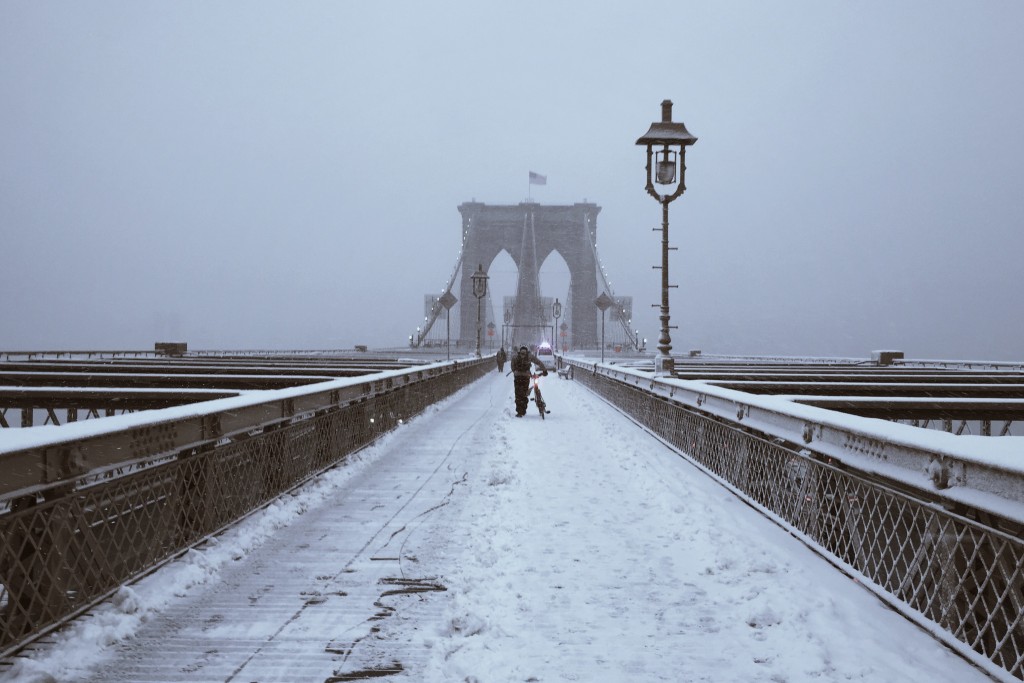
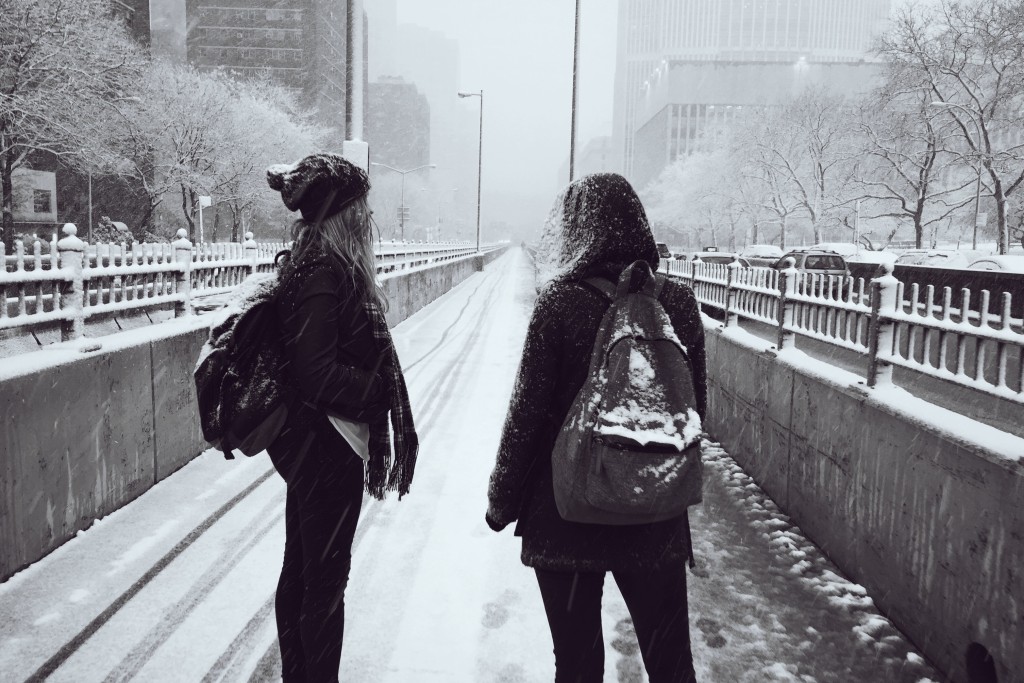
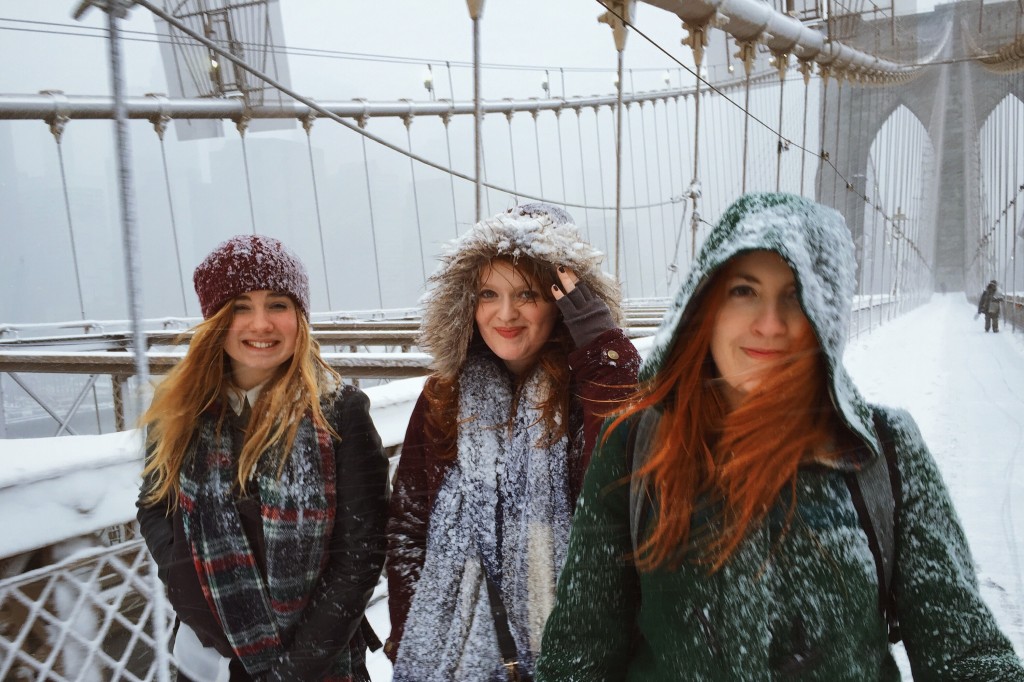
At this point in the day it had begun to snow quite heavily across New York, but we, undeterred, soldiered on with our plan to cross the Brooklyn Bridge and sit down for tea in Brooklyn. As we (eventually) found our way up onto the famed bridge, however, the blizzard picked up and we had to battle through one rather treacherous crossing…
We eventually made it in one piece, however the freezing weather and our lack of local knowledge meant that we struggled to find even a place to grab a coffee, and so we eventually had to admit defeat and took the subway back under the river and towards the centre of Manhattan. There were smiles, though!
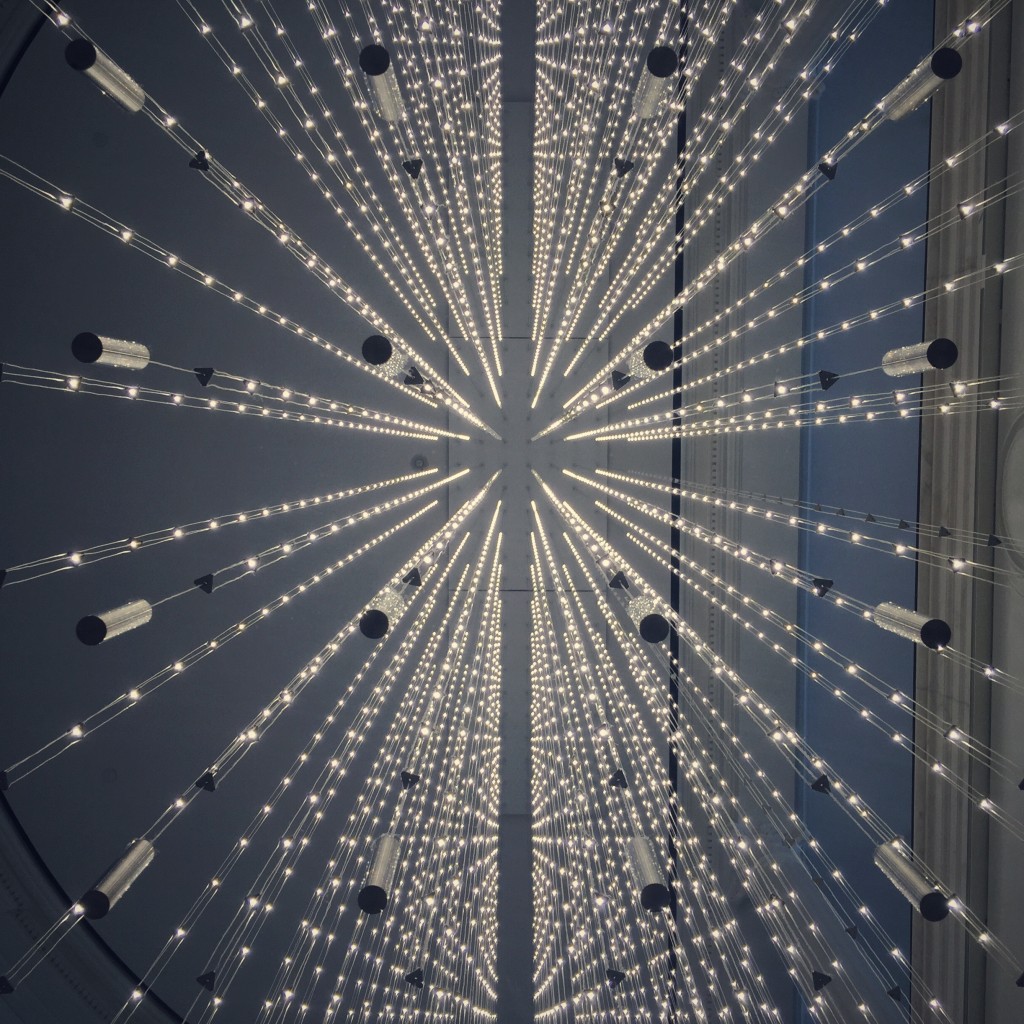
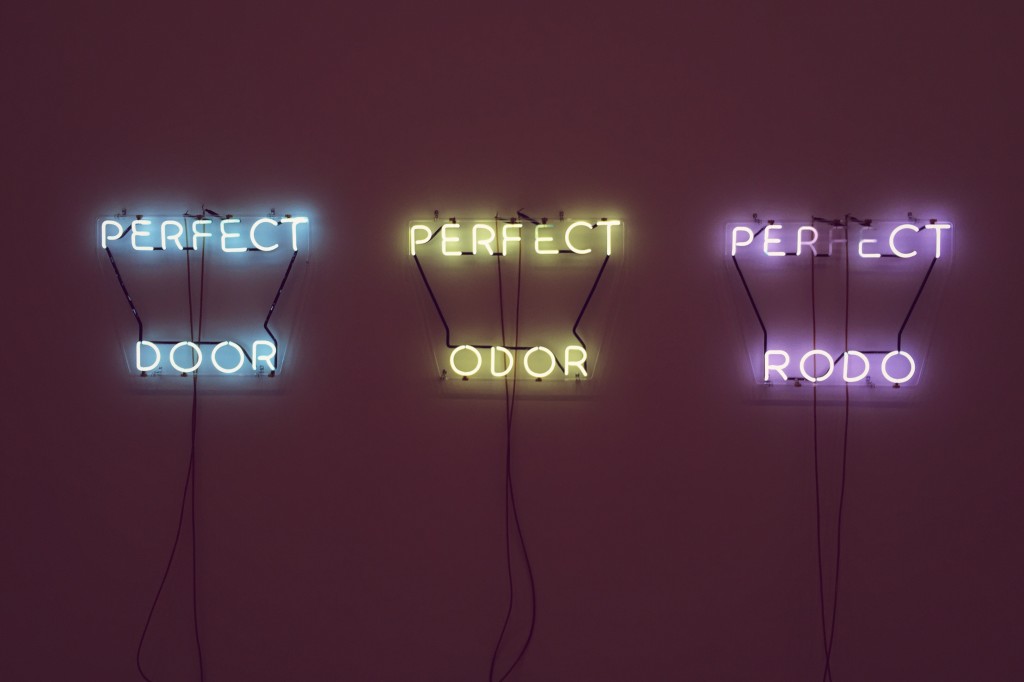
On our final day in NYC, we headed out to the Museum of Modern Art (MoMA), where we saw many of the greats (to be detailed in the aforementioned and forthcoming exhibitions blog post) before spending a good long stint browsing round their two gift shops. I ended up spending $100+ on a new phone case, lunch box (a beautiful Bento Box) and a present for Danni… oops! I was, however, pleased to find that Dan Flavin had a piece in MoMA!
A Dan Flavin installation in MoMA
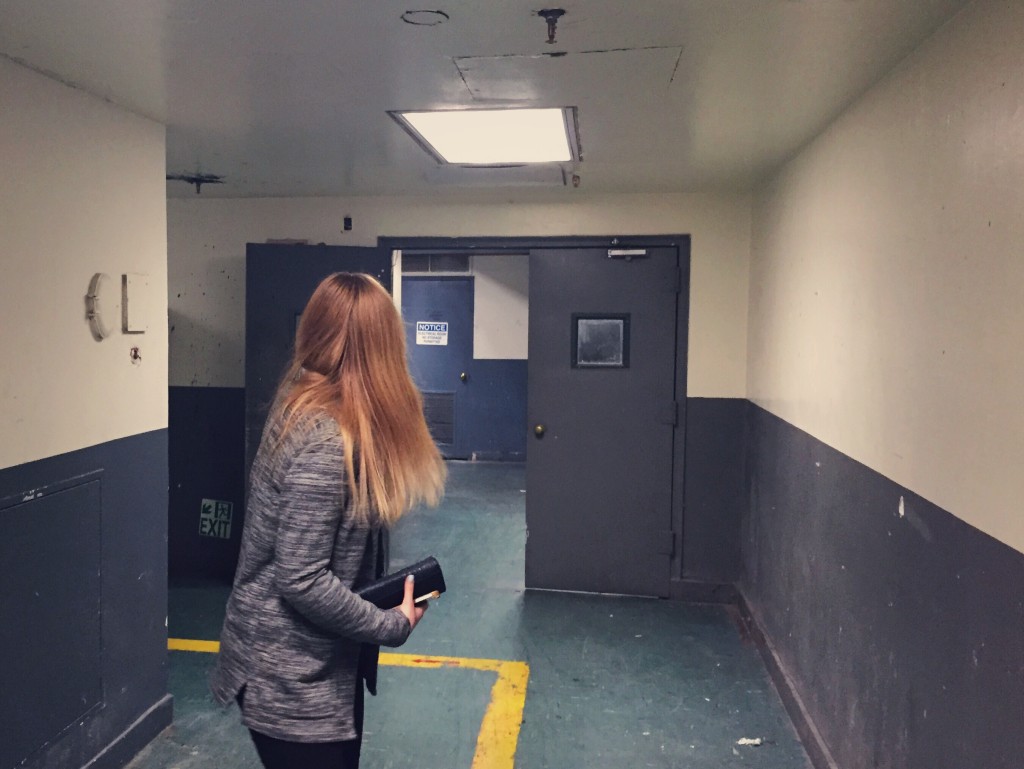
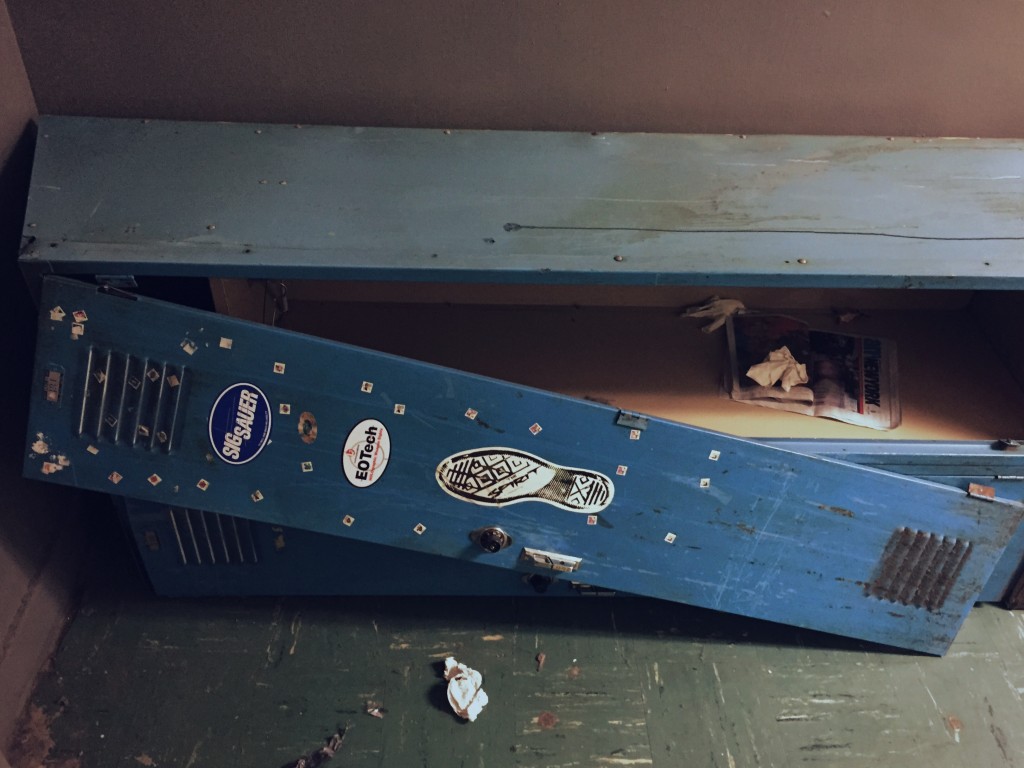
In the morning me and Izzy had also found a secret hidden within the floors of our hotel – two completely abandoned floors between the lobby and the working floors above! We headed down a stairway and went exploring the eerily still-lit corridors.
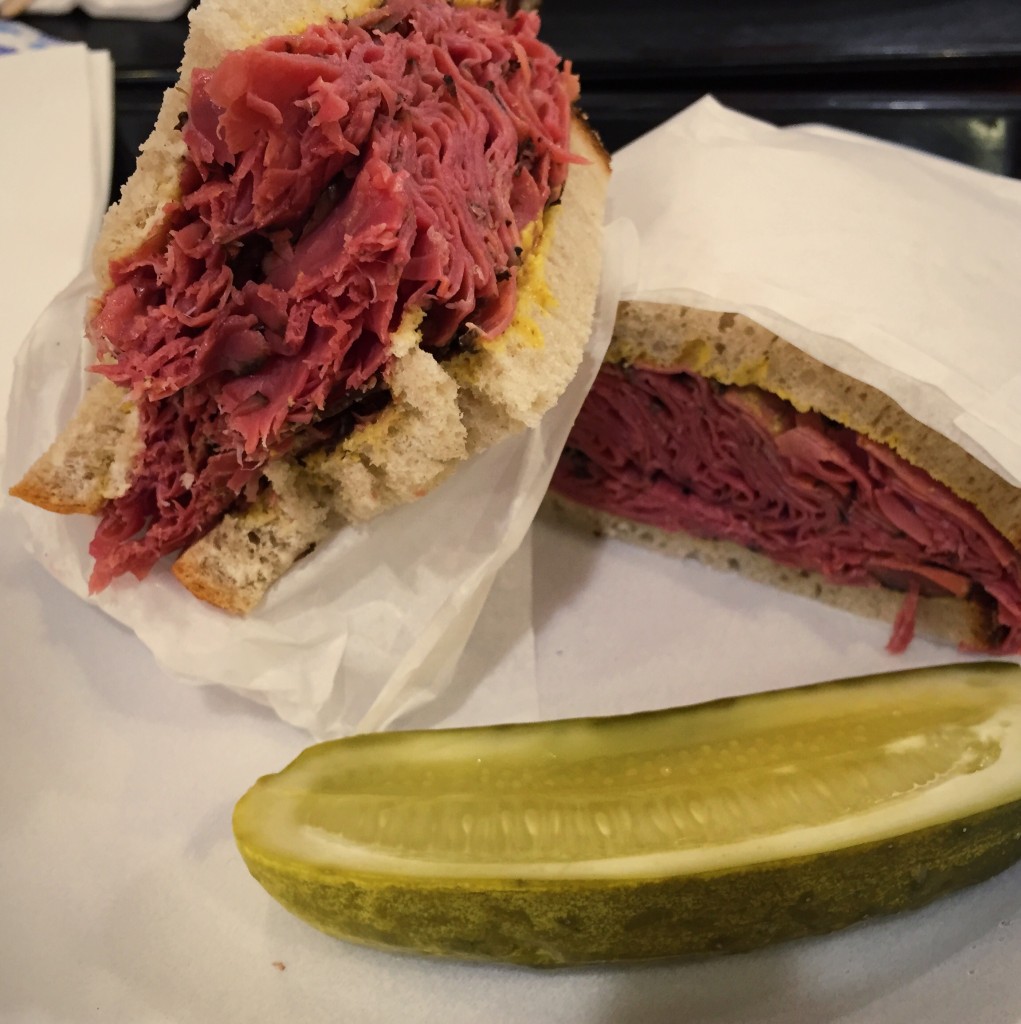
And then, what trip to New York would be complete without a huge-ass pastrami deli sandwich with customary huge-ass pickle?
In brief, New York for me was huge portions of food, darting between rushed pedestrians along the overcrowded footpathssidewalks and generally wandering around and soaking up the lively atmosphere and culture. I had set off with the belief that I’d hate the place, being a bit of a country bumpkin and claustrophobe, but I found the city surprisingly fresh and pleasant.
I have many other trips lined up for this summer, including both Berlin and Barcelona (bank account permitting), but I have a feeling that me and New York will be meeting again someday…